2026-01-15
Israeli Colonists take control of agricultural lands in Khirbet al-Rahwa, closing them off and beginning land leveling in Dhahiriya town / Hebron Governorate
Violation: Closure of farmers’ lands.
Date: Since 15/1/2026.
Location: al-Rahwa – Dhahiriya / Hebron Governorate.
Perpetrators: Israeli colonies.
Victims: Farmers from Dhahiriya town.
Details:
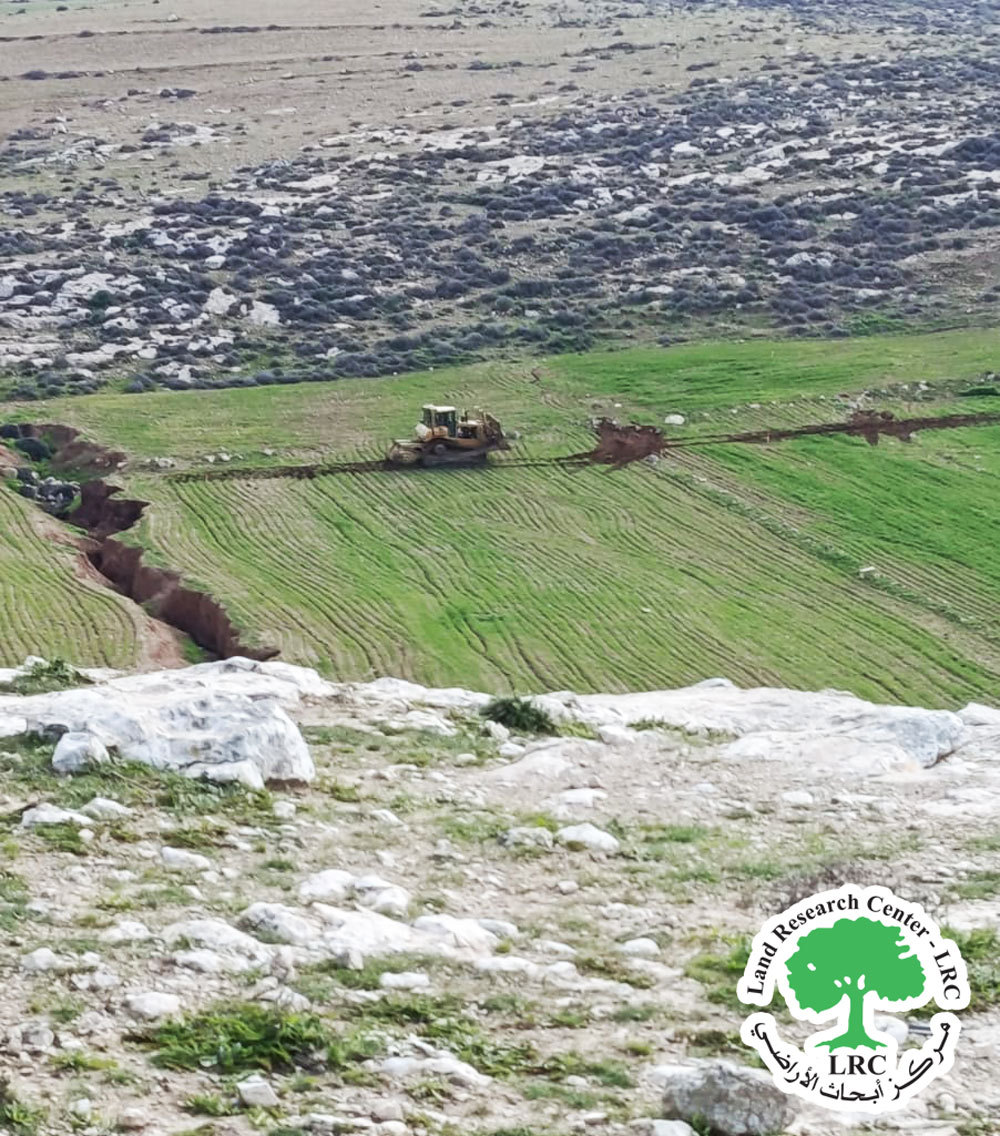
Farmers from Khirbet al-Rahwa, south of Dhahiriya town in the southern Hebron Governorate, stated that Israelis carried out land leveling of areas planted with winter crops on their lands. They also closed off additional areas and surrounded their residential homes in the khirbeh.
Farmer Samer Jamal Makhareza (26 years old) said in his testimony to a center researcher:
“On 15/1/2026, we were surprised when a group of Israelis arrived accompanied by a Caterpillar D9 armored bulldozer with a large blade and a rear attachment like a massive plow. They opened a road through the flat agricultural lands and then plowed cultivated areas of winter crops such as wheat and barley. The bulldozer leveled about 12 dunums of my barley-planted land. When I tried to reach the area to see what was happening, I was unable to and was afraid to approach them.”
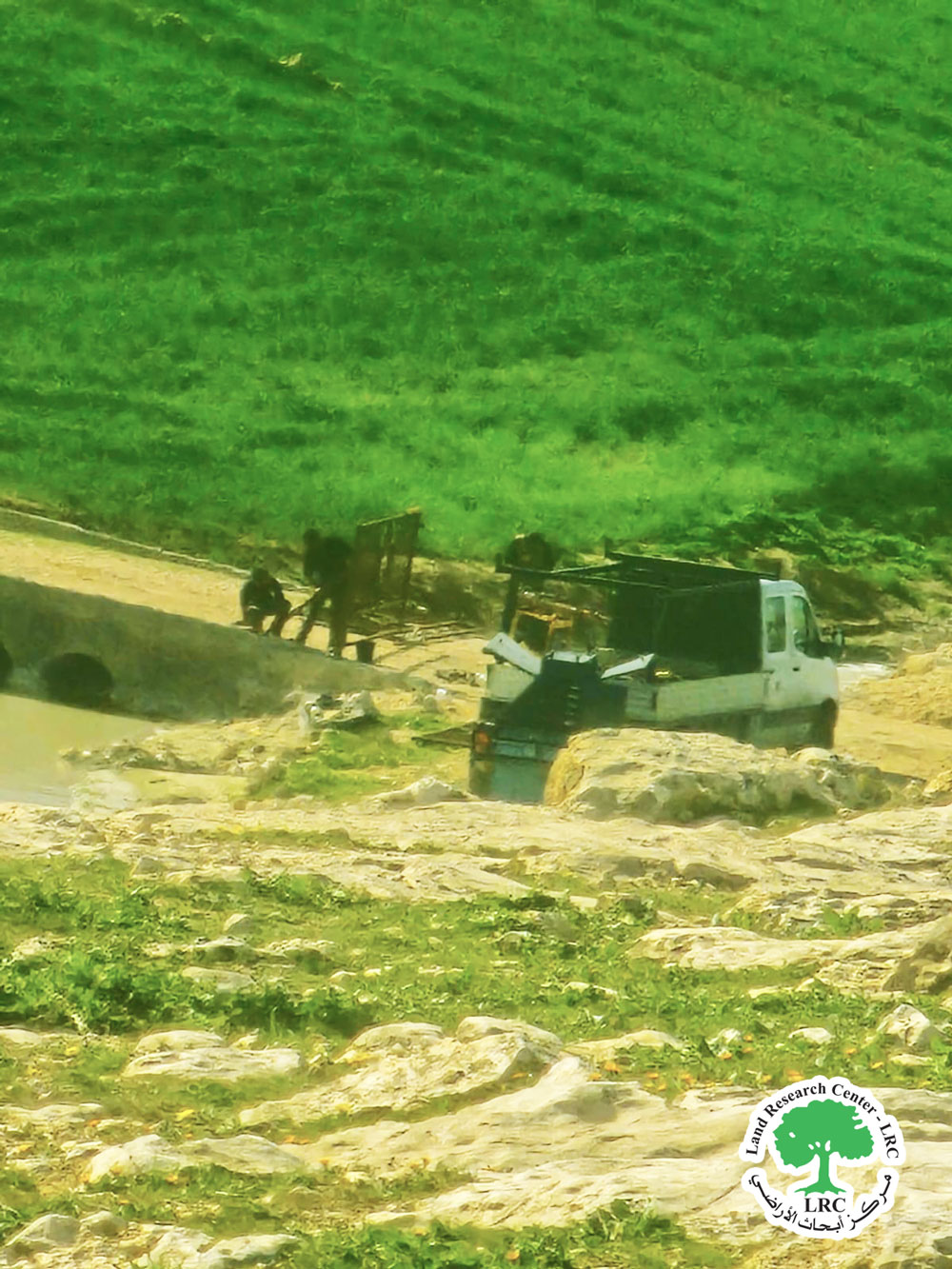
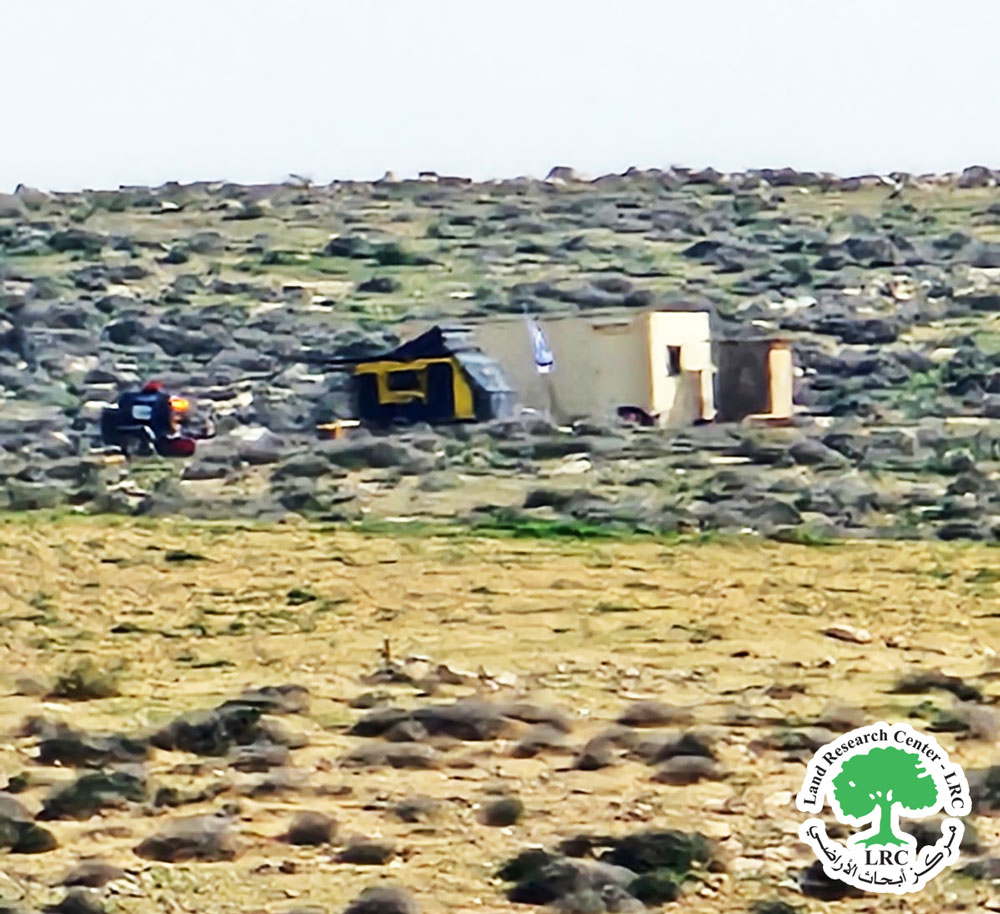
Makhareza added that Israelis brought additional machinery and set up a tent and a caravan at the southern edge of the khirbeh. They stay there and intermittently work on farmers’ lands depending on weather conditions, stopping work during rainfall and low-pressure weather systems affecting the area.
He further noted that he resides on the eastern edge of the khirbeh alongside four other families, with a total of about 25 individuals. They rely on livestock raising and grazing on their lands. However, on 1/2/2026, Israelis installed a metal fence near the residents’ homes, separating the residential area from agricultural lands and grazing areas.
Makhareza stated that the residential cluster has now become enclosed from the south by the metal fence, from the east by the newly established outpost in Wadi al-Simsim, from the north by the “Tina” Israeli colony overlooking the entire area, and from the west by a road leading to that colony.
Farmer Majdi Salim al-Tal, who lives on the western side of the khirbeh, explained that Israelis entered his family’s lands, carving channels resembling flood paths and digging pits. He added that he had heard they intend to establish a “farm” in the area, though no further details were available regarding its nature.
Al-Tal (34 years old) said in his testimony:
“I saw surveyors placing markers on the lands of the khirbet. Days later, they brought machinery and began leveling them. An Israeli in civilian clothing came and instructed farmers not to approach the lands in the southern and western parts of the khirbet, which are estimated at about 2,000 dunums and belong to several families from the town, including al-Tal, Makhareza, Jabarin, Mansiyeh, al-Samad, Abu Allan, Samamra, Awaiysa, and others.”
He added that on 2/2/2026, Israelis installed three gates at different points around the edges of the lands after fencing off the eastern part of the khirbet. These gates appear to be a preliminary step toward a full enclosure of the area.
Farmers noted that the area expected to be seized and closed off—approximately 2,000 dunums—consists mostly of land cultivated with winter crops, while the remainder is grazing land used by residents of the khirbet. Within these lands are six rainwater cisterns, each with a capacity ranging between 150–200 cubic meters, which farmers previously used to water livestock and help alleviate water shortages during summer. The region suffers from chronic water scarcity.
They further stated that livestock in the khirbet no longer roam freely or access grazing areas after the land takeover. As a result, farmers are forced to purchase expensive animal feed, even though this is a season of abundance with heavy rainfall that has produced excellent pasture compared to previous years.
They also emphasized that these actions aim to forcibly displace the remaining resilient residential cluster in the southern area between Dhahiriya and as-Samu, after a series of Israeli attacks and assaults that previously forced many other communities to leave their lands under compulsion.
مشروع: حماية الحقوق البيئية الفلسطينية في مناطق "ج" SPERAC IV - GFFO
Disclaimer: The views and opinions expressed in this report are those of Land Research Center and do not necessarily reflect the views or positions of the project donor; the Norwegian Refugee Council.
إخلاء المسؤولية: الآراء ووجهات النظر الواردة في هذا التقرير هي آراء ووجهات نظر مركز أبحاث الأراضي ولا تعكس بالضرورة وجهات نظر أو مواقف الجهة المانحة للمشروع؛ المجلس النرويجي. للاجئين