2025-05-04
Colonists Graze Their Cattle and Destroying 5 Dunams in Al Hamma area / North Nablus Governorate
Violation: Destruction agricultural cultivating lands.
Location: Al Hamma area in Jordan Valley / Tubas Governorate.
Date: May,4th 2025.
Perpetrator: Colonial outpost in Kallit Hamad.
Affected party: Farmer Mohammad Sameh Masa’ed.
Details:
Kharbit Al Hamma located in the heart of Jordan Valley witnessed an aggressive campaign by settlers, continue their practices of sabotage and destruction the agricultural system in entire the area.
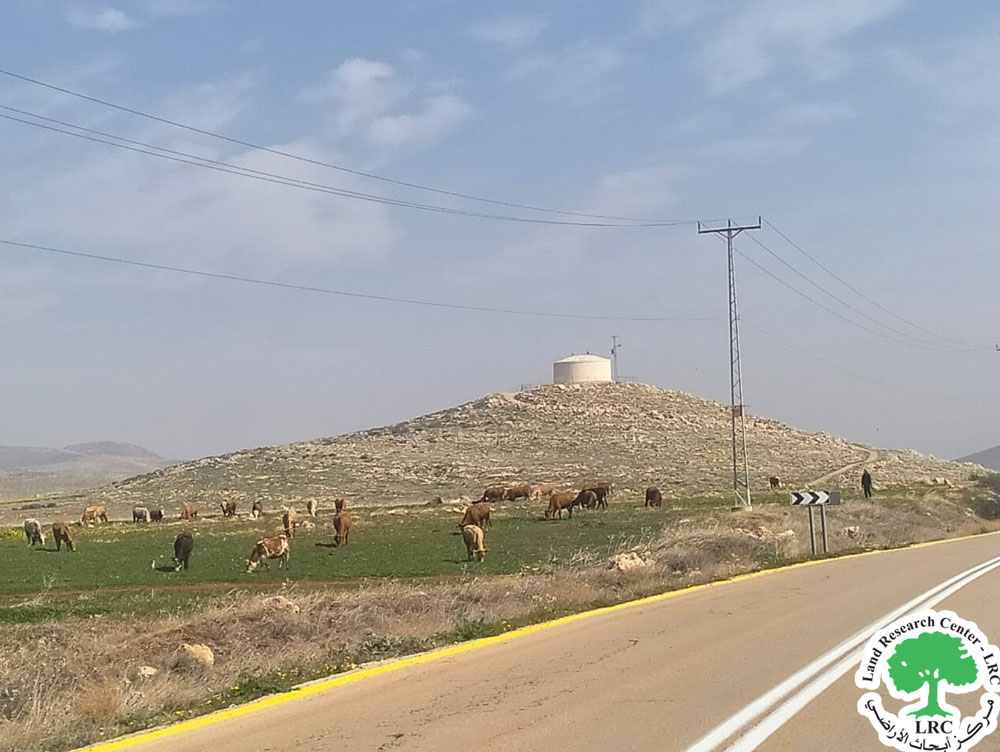
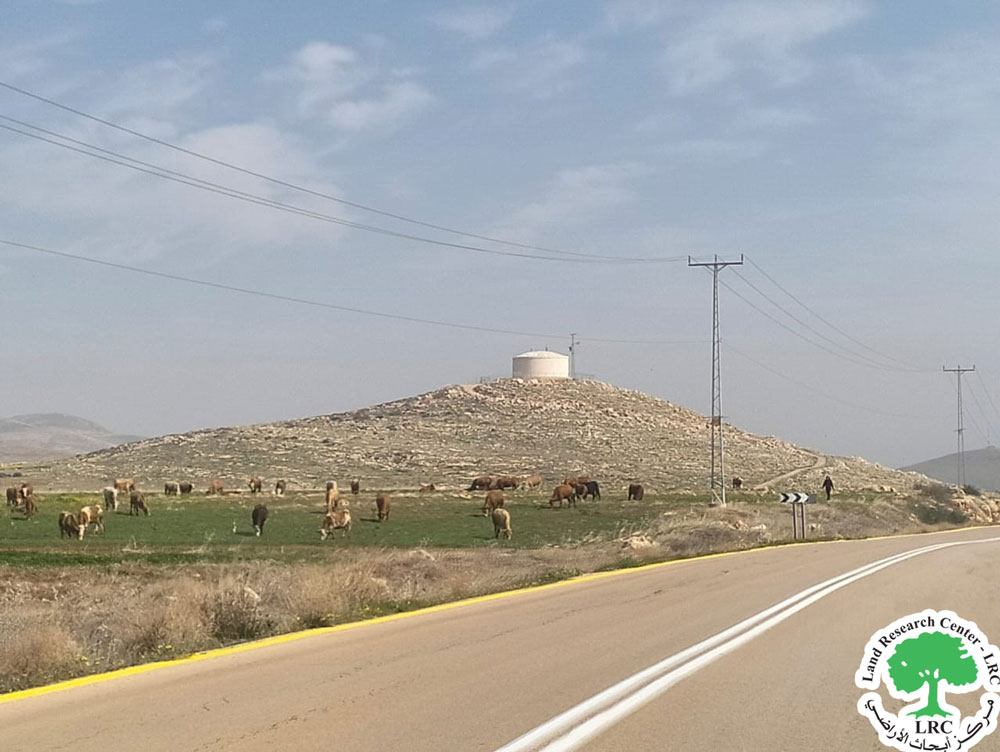
A group of settlers from pastoral outpost located on ‘Al Hamma’ area targeted a piece of land planted with summers’ crops, with total area 5 dunams, which belongs to farmer Mohammad Sameh Al Masa’ed, as they deliberately released their cattle into the land, causing extensive damages.
The affected farmer, Mohammad Al Masa’ed, told to the LRC researcher as follows:
‘’We have been facing an aggressive campaign by settlers in recent times, they cattle their cows with aim of destroying and damaging our lands, as they considered any land that their cattle reach becomes to them, and have the right to exploit it. ".
The affected farmer added:
‘’My loss is significant, previously, I lost part of my sheep due to the lack of grazing areas and water resources. Now, the land I used to plant has become restricted by settlers who deliberately released their cattle to cause damages. We have reported Palestinian liaison office several times but with no benefit. Noted that the land planted with various grains as considered as my primary source of income to my family, consisting of 5 members including 3 children and 3 females.’’
It is worth mentioning that the field researcher has documented several times that settlers from pastoral outposts cattle their sheep and cows in agricultural fields with aim of damaging the crops to farmers who they are waiting the growth of these crops to support their families, in the absence of limited opportunities and the decline of the livestock sector.
It is noted that Al Hamma Community is considered as one of the Bedouin communities in Wadi Al Maleh, and 18 families live in it and relying on agriculture and sheep as a main source of income, located nearby the colonial outpost community that established on 2019, and considered as a direct threat to live of the residents.
The field researcher team at LRC documented numerous of violations including: the land, the agriculture, and the Palestinian farmer in Khirbet Al Hamma over past years.
Overgrazing in Palestinian agricultural lands is one of the Israeli occupation's environmental violations:
The practice of overgrazing in cultivated lands can lead to soil erosion and degradation. It also reduces biodiversity, resulting in decreased productivity and biological diversity, which is one of the causes of desertification.
The constant trampling of plants by animals in green areas accelerates the death of plants and vegetation cover. As animals trample on the new growth buds of plants during grazing, it leads to soil erosion, which causes deterioration of agricultural lands. In areas like Bardala village, the damage is significant, leading to the ongoing process of desertification in agricultural regions, thus causing harm to the environment.
Without a doubt, overgrazing by the settlers of the Israeli occupation is primarily aimed at making the soil barren and uninhabitable, in order to discourage Palestinian landowners from benefiting from their lands, which will eventually push them to abandon the land and migrate. Therefore, they release their sheep and cattle into Palestinian lands cultivated with grains, vegetables, or designated for grazing sheep, and prevent the rightful owners from accessing them. They repeatedly overgraze the land until the soil becomes devoid of any seeds or vegetation, which threatens the extinction of plant biodiversity, and consequently, animal biodiversity. This leads to a threat to insect diversity and the overall life in the land.
The settlers, as shepherds, only release their livestock onto the land but do not plow, plant, or take care of it agriculturally; they leave it fallow. This exacerbates the destruction of its biodiversity because the land is not theirs—they are trespassers and thieves, not true owners. In contrast, Palestinians have a deep, historical connection to the land, and they continue to nurture and cultivate it. True landowners ensure partial grazing during specific seasons that protect species and do not threaten wildlife. They care for the delicate ecosystems, rare plants, and medicinal herbs, maintaining a deep bond with the land that has become part of Palestinian culture. True landowners work to develop the land, not degrade it. This is why agricultural lands in Palestine have evolved and persisted for thousands of years, but the occupation has turned many areas into barren wastelands, with the political and colonial objective of making these pastures ripe for occupation and settlement.
[1] Source: Special Bulletin Issued by the LRC– December 2024 titled "Pastoral Settler Outposts: A Starting Point for the Theft of More Palestinian Land."
مشروع: حماية الحقوق البيئية الفلسطينية في مناطق "ج" SPERAC IV - GFFO
Disclaimer: The views and opinions expressed in this report are those of Land Research Center and do not necessarily reflect the views or positions of the project donor; the Norwegian Refugee Council.
إخلاء المسؤولية: الآراء ووجهات النظر الواردة في هذا التقرير هي آراء ووجهات نظر مركز أبحاث الأراضي ولا تعكس بالضرورة وجهات نظر أو مواقف الجهة المانحة للمشروع؛ المجلس النرويجي. للاجئين