2026-04-26
The Israeli Occupation Forces Uproot 500 Ancient Olive and Almond Trees from the Lands of Burqa Village / Nablus Governorate
- Violation: Uprooting of 500 olive and almond trees and other fruit-bearing trees
- Location: Burqa village – north of Nablus
- Date: 26/04/2026
- perpetrators: Israeli Occupation Forces
- Victim: 14 families comprising 87 individuals
Details:
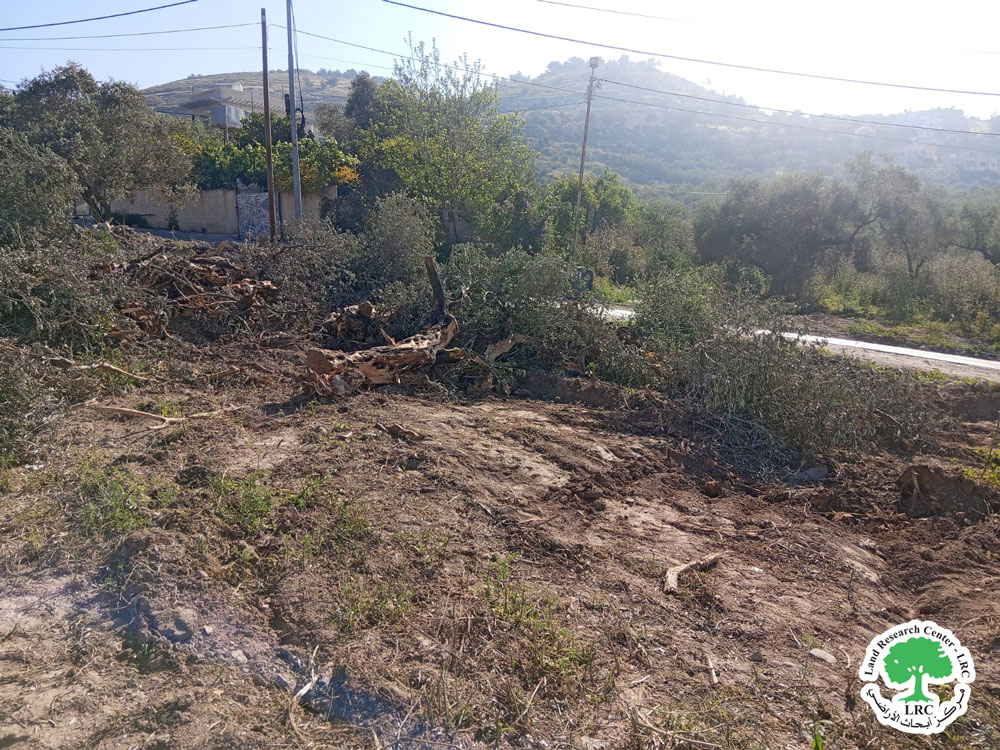
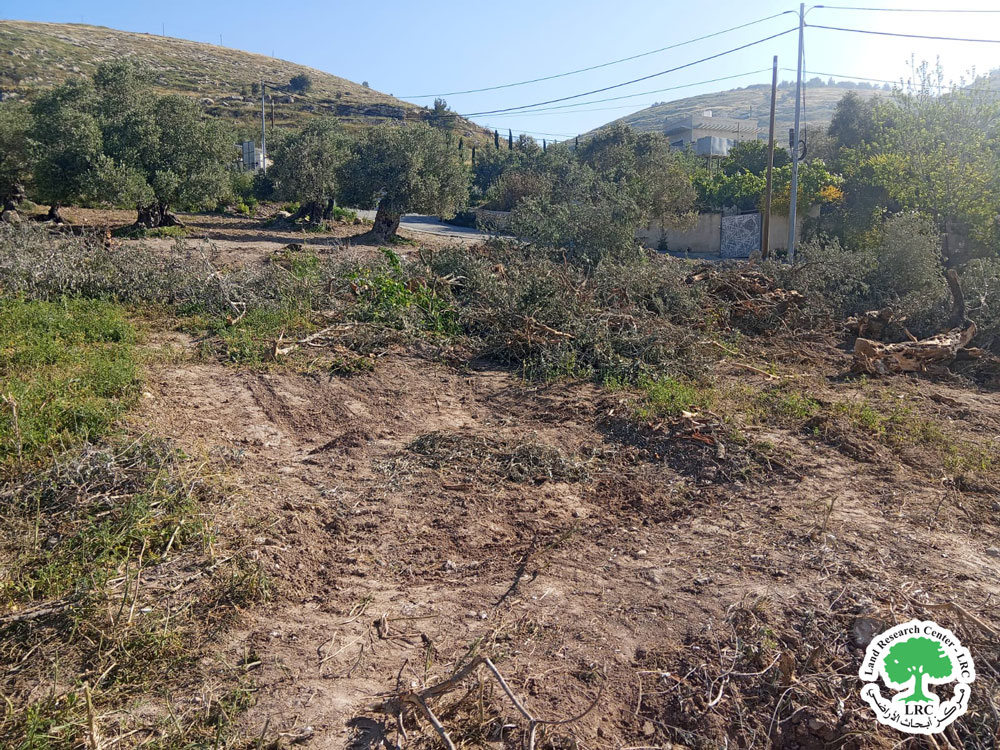
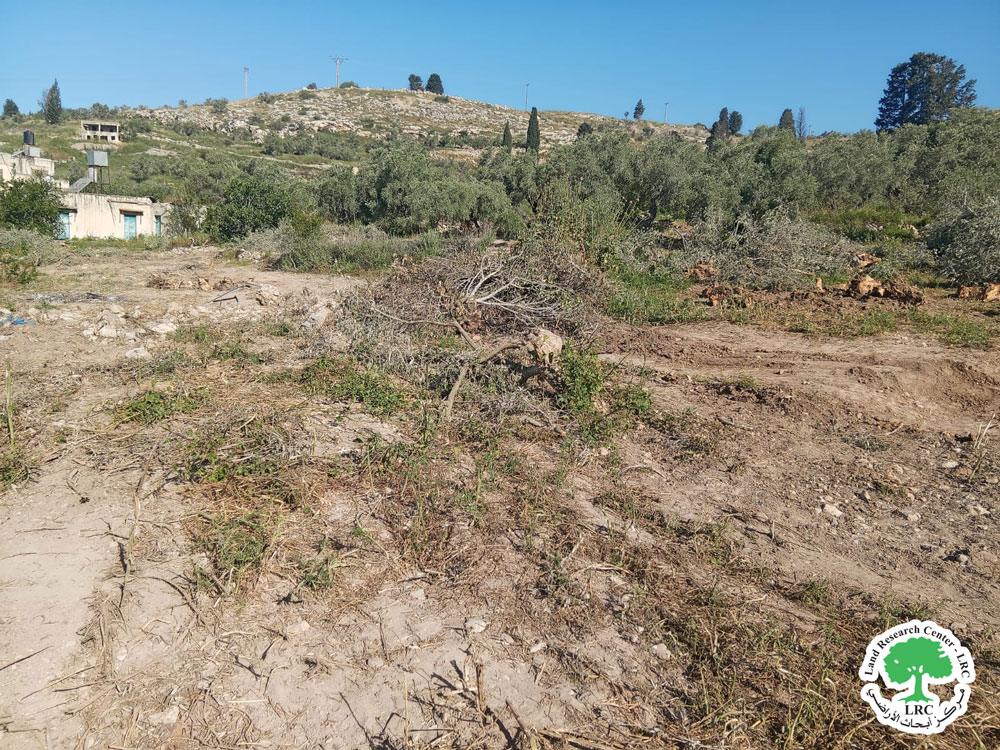
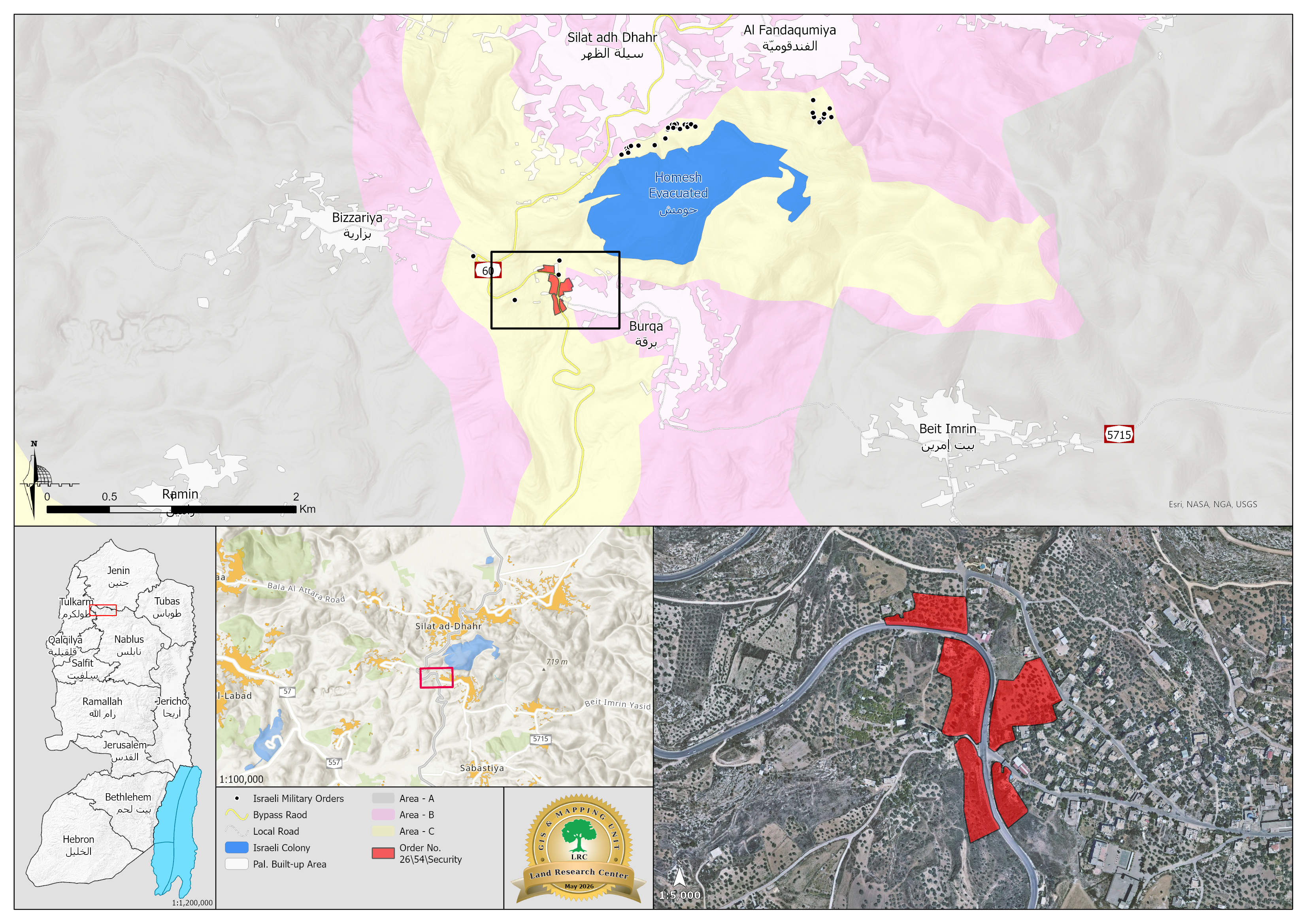
In a serious escalation targeting agricultural land and rural infrastructure, Israeli occupation forces carried out a large-scale land bulldozing operation on the morning of 26 April 2026 in the northern area of Burqa village, located north of Nablus city.
The operation coincided with a heavy deployment of Israeli forces at the northern entrance of the village, where the main road connecting Jenin and Nablus was closed.
During the operation, occupation bulldozers, protected by heavily armed military forces, carried out systematic bulldozing along both sides of the main Nablus–Jenin road. The attacks included:
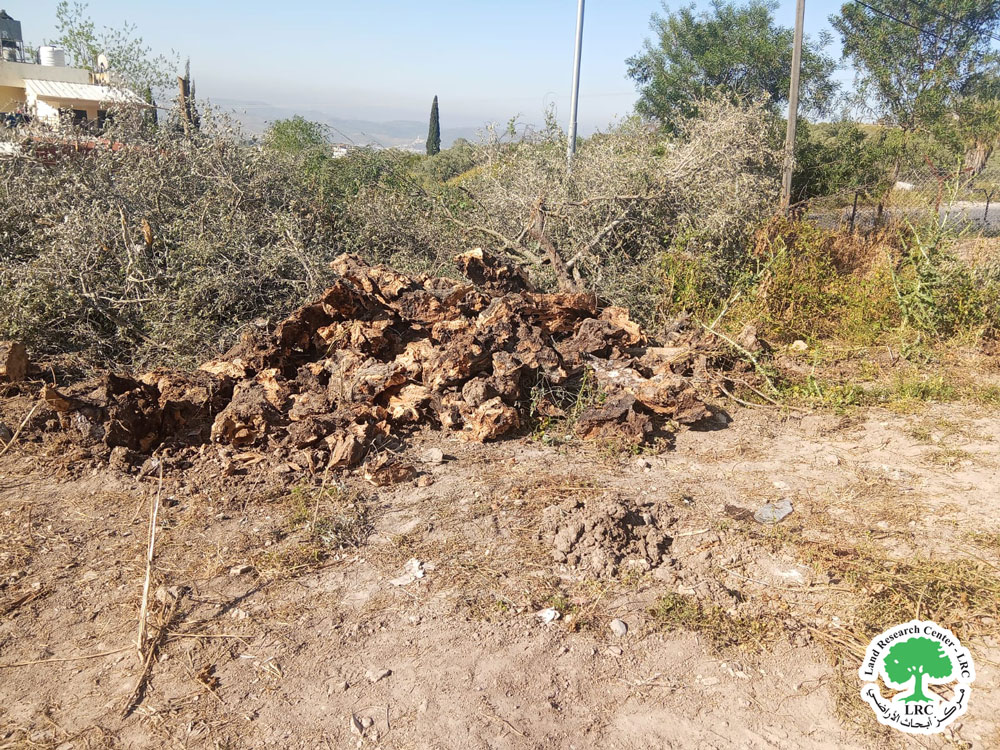
- The uprooting and destruction of more than 500 trees, including olive, fig, almond, and carob trees, in addition to ancient trees of high economic and environmental value.
- The imposition of a military cordon around the area, preventing farmers from accessing their lands, while sound bombs were fired toward nearby residential areas, causing fear and panic among village residents.
- Severe damage to the agricultural sector in the area through the destruction of a key economic resource for dozens of families, in addition to damaging the environmental and agricultural infrastructure linked to these lands.
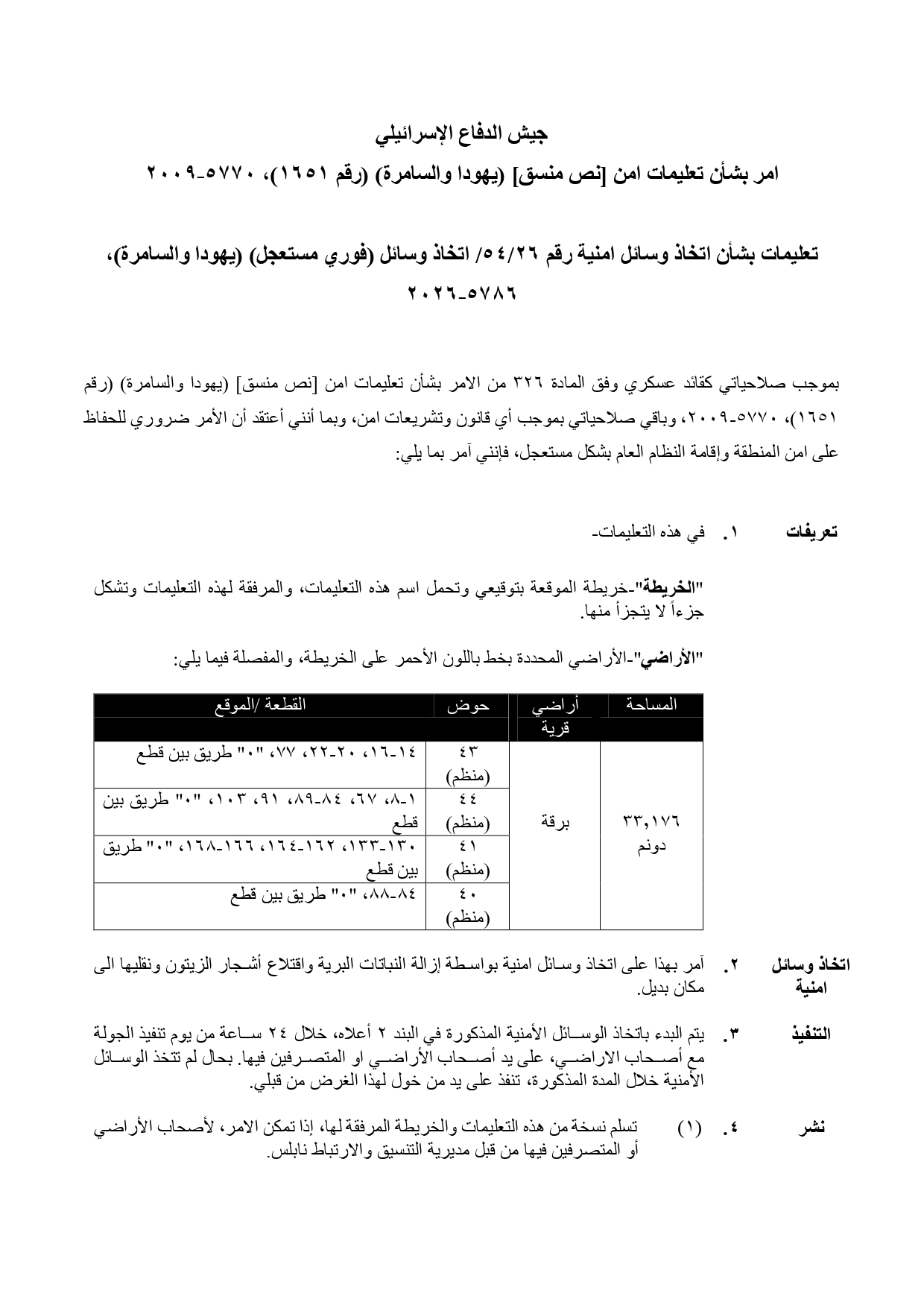
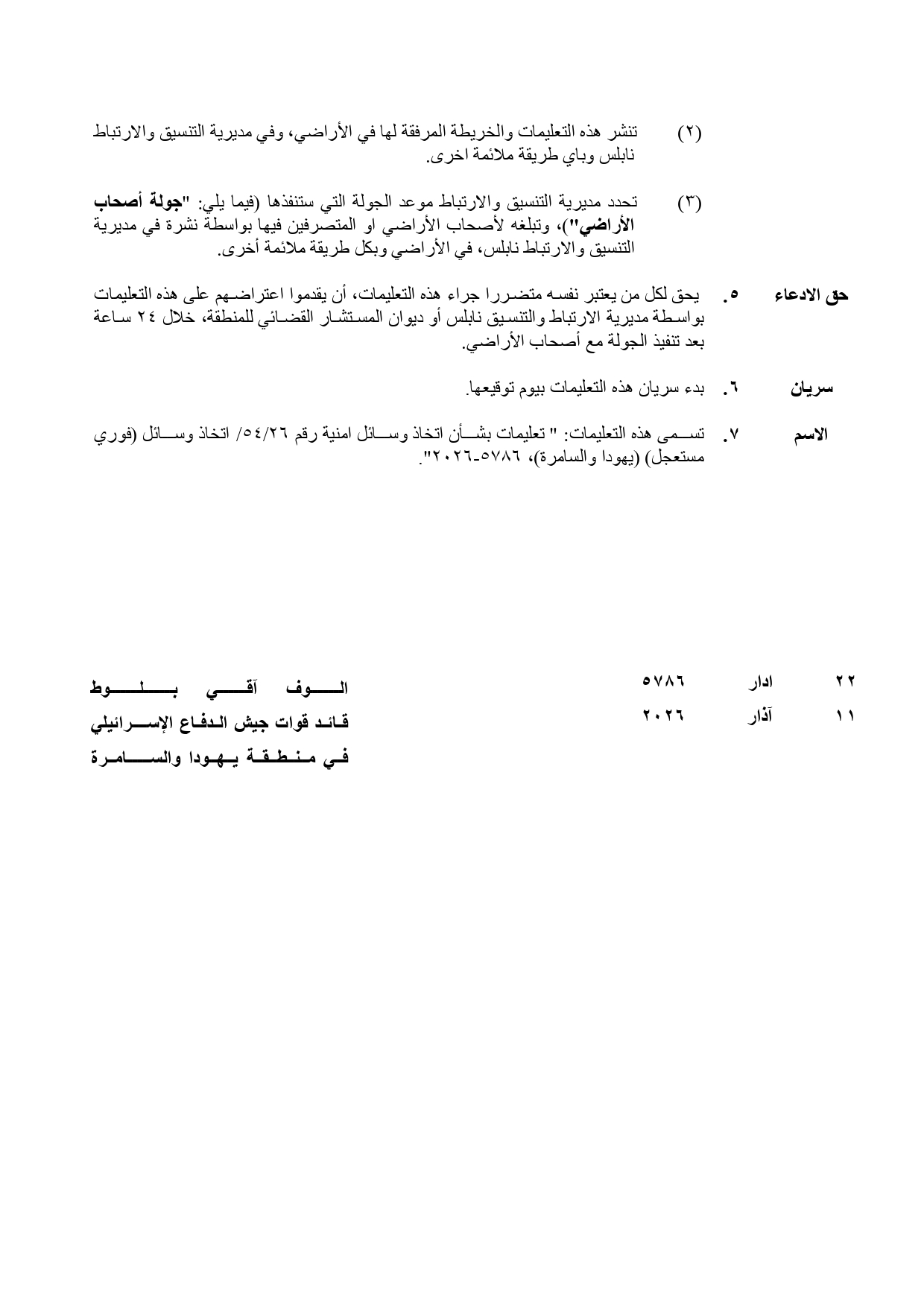
Field data indicate that the bulldozing and uprooting operations carried out around Burqa village were based, according to Israeli authorities, on a military order issued by the so-called Israeli “Civil Administration.”
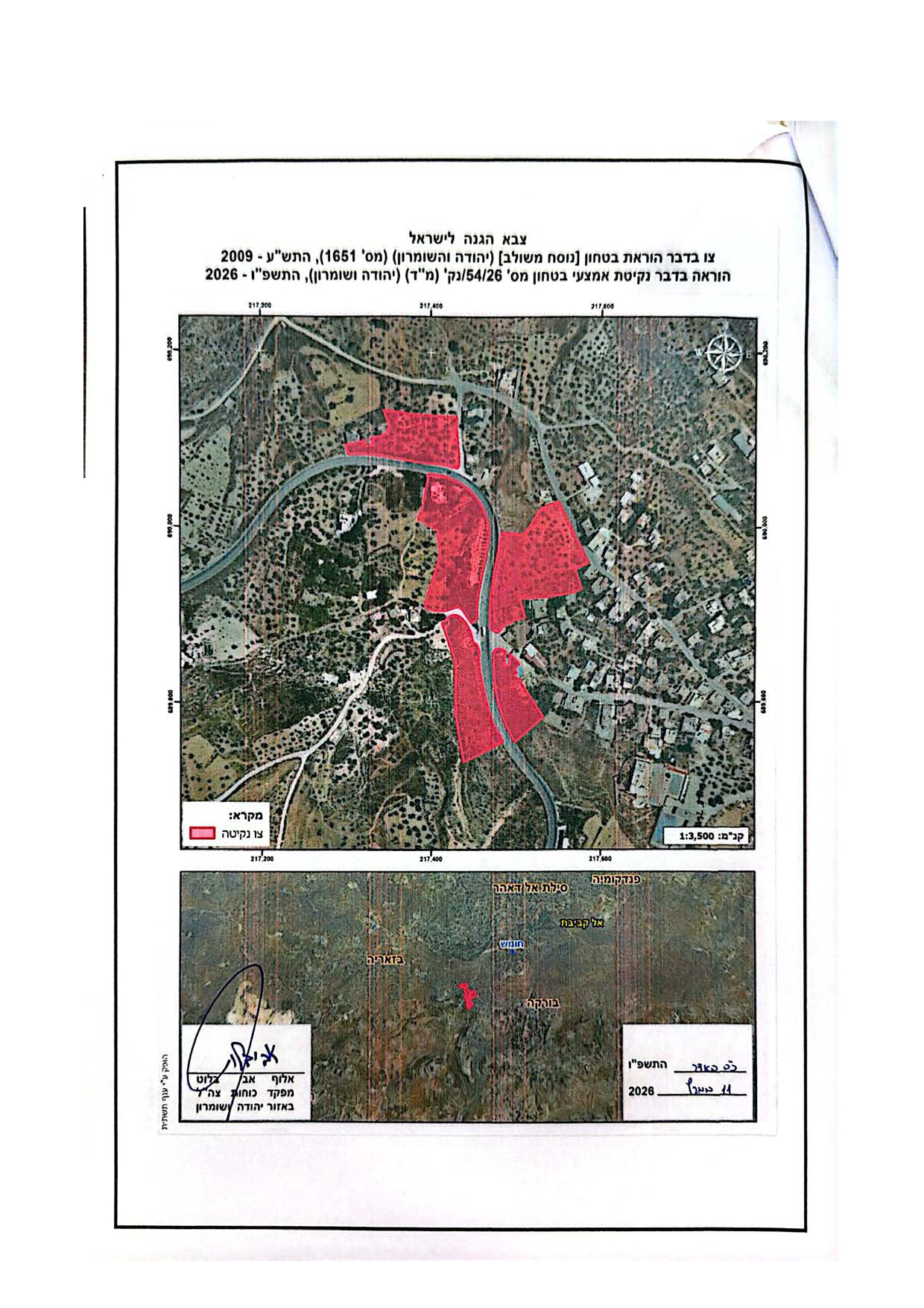
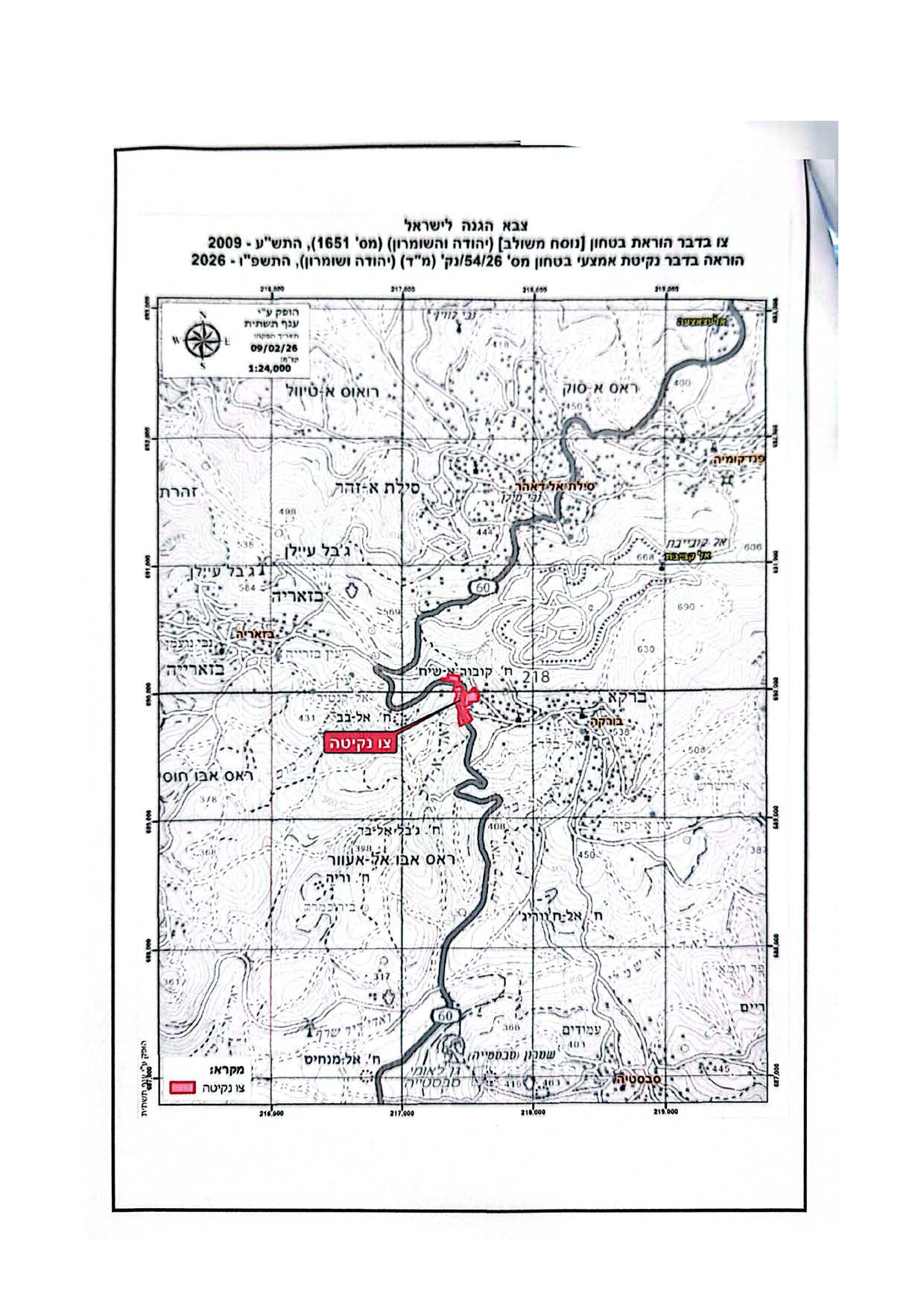
The order, titled “Instructions Regarding Security Measures” No. (26/54) and issued on 11 March 2026, stipulates the seizure of approximately 33 dunums of land along the main road adjacent to the northern entrance of the village.
According to the order, the targeted lands are located within Basin Nos. 41, 43, and 44 of Burqa village lands, north of Nablus. These areas are agricultural lands planted with fruit-bearing trees that constitute a primary source of income for local residents.
This measure appears to be part of a broader policy of using “security” justifications to seize agricultural land and alter its features, directly undermining private property rights and sustainable agricultural use.
Damage Assessment
According to municipal records and direct field research, the damage included:
- Destruction and uprooting of ancient Roman olive trees, many over 100 years old.
- Damage to fig, grape, citrus, pomegranate, avocado, mulberry, guava, almond, cypress, eucalyptus, and cactus trees.
- Bulldozing of approximately 36 dunums of agricultural land.
- Destruction of 175 meters of fencing.
- Removal of 45 metal fence posts/corners.
- Damage to 35 square meters of retaining walls.
- Total affected population: 83 individuals, including 21 children and 41 women.
The following table shows the details of the damages according to municipal council records and direct field survey;
Farmer Name | Family Members | Children | Females | Total Area (dunums) | Affected Trees | Tree Age | Type of Damage |
Kareem Fawzi Ragheb Shbeeb | 9 | 2 | 5 | 1 | 3 almond, 2 pomegranate, 2 lemon, 2 mulberry | 50, 15, 30, 15 years | Breaking |
Fawzi Hussein Abdullah Hajj | 5 | 0 | 2 | 1.3 | 10 olive, 10 grape, 10 fig, 20 almond, 1 cactus, 4 avocado | 50, 10 years | Uprooting & bulldozing |
Waheed Shoukat Faiq Masoud | 9 | 3 | 6 | 0.5 | 4 olive | Roman olive, over 100 years | Bulldozing |
Mohammed Ahmad Jamal Fayez Masoud | 6 | 1 | 3 | 0.5 | 1 loquat, 3 pomegranate, 3 fig, 2 almond, 1 olive, 2 cypress | 30, 20, 30, 15, over 100, 15 years | Breaking |
Amer Abdulrahim Amer Khudra | 7 | 3 | 3 | 8 | 120 olive trees | Roman olive, over 100 years | Bulldozing & uprooting |
Fadi Mahmoud Kamel Masoud | 8 | 1 | 3 | 1 | 10 olive, 6 fig, 1 guava, 10 almond, 4 grape, 1 cactus, 18 cypress | Over 100, 30, 10, 15, 5, 20, 60 years | Bulldozing & uprooting |
Raad Fakhri Nazzir Shbeeb | 8 | 3 | 5 | 1.5 | 4 olive | Roman olive, over 100 years | Bulldozing & uprooting |
Abdel Nasser Mohammed Saeed Abdulrahim Hajj | 4 | 2 | 1 | 5 | 25 olive | Roman olive, over 100 years | Bulldozing & uprooting |
Azzam Mohammed Subhi Kamel Shbeeb | 3 | 0 | 1 | 1.7 | 16 olive, 2 citrus, 2 pecan walnut, 2 fig, 2 cypress, 2 eucalyptus | Over 100, 40, 30 years | Bulldozing & uprooting |
Diab Sami Abdul Salam Hajj | 6 | 2 | 4 | 0.8 | 4 fig, 2 citrus, 2 olive, 1 cactus, 4 grape | 30, over 100, 15, 7 years | Bulldozing & uprooting |
Ziyad Mohammed Saeed Abdulrahim Hajj | 7 | 2 | 3 | 3 | 23 olive, 3 cypress | Over 100, 50 years | Bulldozing & uprooting |
Raba’a Abdullah Abdulrahman Qararieh | 5 | 1 | 3 | 0.2 | 5 olive | Roman olive, over 100 years | Bulldozing & uprooting |
Ahmed Omar Ahmed Shbeeb | 6 | 1 | 2 | 0.9 | 7 olive, 2 fig | 50, 10 years | Bulldozing & uprooting |
Total | 83 | 21 | 41 | 24.1 | 358 trees | — | — |
Farmer name | Area bulldozed (dunums) | Fence length (meters) | Number of removed corners | Retaining walls (m²) | Nature of damage |
Fouad Hussein Abdullah Haj | 1.3 | 75 | 20 | 0 | Bulldozing of agricultural soil and its loss; destruction of fence 75 m long and 1.5 m wide; iron corners |
Waheed Shoukat Faiq Masoud | 0.5 | 0 | 0 | 0 | Bulldozing of agricultural soil and its loss |
Amer Abdul Rahim Amer Khadra | 8 | 0 | 0 | 0 | Bulldozing of agricultural soil and its loss |
Raed Fakhri Nazeer Shbeeb | 0.5 | 0 | 0 | 0 | Bulldozing of agricultural soil and its loss |
Abdul Nasser Muhammad Saeed Abdul Rahim Hajji | 1.8 | 0 | 0 | 0 | Bulldozing of agricultural soil and its loss |
Azzam Muhammad Subhi Kamel Shbeeb | 0.5 | 0 | 0 | 0 | Bulldozing of agricultural soil and its loss |
Azzam Muhammad Subhi Kamel Shbeeb | 0 | 100 | 0 | 0 | Fence 100 m long and 2 m wide |
Azzam Muhammad Subhi Kamel Shbeeb | 0 | 0 | 25 | 0 | Iron corners |
Azzam Muhammad Subhi Kamel Shbeeb | 0 | 0 | 0 | 15 | Retaining walls |
Bashir Abdul Latif Amer Hajji | 0.955 | 0 | 0 | 0 | Bulldozing of agricultural soil and its loss; family of 4 (including 2 children and 1 female) |
Dhiyab Samih Abdul Salam Hajji | 0.5 | 0 | 0 | 0 | Bulldozing of agricultural soil and its loss |
Ziad Muhammad Saeed Abdul Rahim Hajji | 3 | 0 | 0 | 0 | Bulldozing of agricultural soil and its loss |
Raba’a Abdullah Abdul Rahman Qararieh | 18 | 0 | 0 | 0 | Bulldozing of lands |
Ahmed Omar Ahmed Shbeeb | 0.941 | 0 | 0 | 20 | Retaining walls; bulldozing of agricultural soil and its loss |
Testimony from Farmer Diab Haji
In a documented testimony to researchers from the Land Research Center, farmer Diab Haji, one of those directly affected, stated:
“The uprooted trees represented a deeply rooted historical and agricultural heritage for the village residents. Some of these trees were hundreds of years old. They were not merely agricultural resources but an essential part of the village’s identity and collective memory, reflecting its rural character and agricultural diversity.”
He added:
“These lands were an important supplementary source of income for families, especially under difficult economic conditions. Olive oil and seasonal crops produced there were marketed in Nablus markets and helped sustain farming households.”
He emphasized that the destruction caused severe economic, environmental, and psychological harm, resulting in the loss of a fundamental component of the agricultural landscape and creating profound feelings of loss and anxiety among farmers due to the targeting of their livelihood and historical connection to the land.
Previous Violations in the Area
Field data documented by the Land Research Center indicate that the targeted area around Burqa village has repeatedly been subjected to attacks in previous years.
Past violations included:
- The firing of sound and incendiary bombs toward agricultural lands, causing fires that burned dozens of olive trees and severely damaged vegetation cover.
- Repeated attacks by Israeli settlers, including cutting olive trees near the main road and intimidating farmers to discourage them from accessing and cultivating their lands.
Environmental and Agricultural Impact
The bulldozing and tree-cutting operations caused severe and complex environmental damage affecting the local ecosystem:
- Biodiversity: The targeted area historically hosted a rich agricultural ecosystem with diverse birds, insects, and wild plants. Tree uprooting and vegetation destruction disrupted this ecological balance and reduced natural habitats.
- Vegetation Cover: Large areas of natural vegetation and fruit-bearing trees were destroyed, weakening the land’s natural regenerative capacity.
- Soil Degradation: Heavy machinery and destruction of agricultural terraces and stone retaining walls destabilized the soil structure and increased vulnerability to erosion, threatening the long-term sustainability of agricultural use.
These cumulative impacts are expected to lead to declining agricultural productivity, ecosystem deterioration, and broader environmental imbalance in the area.
International Legal Context
These practices may amount to a form of collective punishment against the civilian population, explicitly prohibited under international law, including the provisions of the Fourth Geneva Convention, which guarantees protection for civilians and their property under occupation.
Targeting civilian agricultural property without imperative and proportionate military necessity also violates the principles of distinction, proportionality, and military necessity under international humanitarian law.
Accordingly, these measures constitute grave breaches of the legal obligations incumbent upon an occupying power and warrant international accountability through relevant human rights and international legal mechanisms.
مشروع: حماية الحقوق البيئية الفلسطينية في مناطق "ج" SPERAC IV - GFFO
Disclaimer: The views and opinions expressed in this report are those of Land Research Center and do not necessarily reflect the views or positions of the project donor; the Norwegian Refugee Council.
إخلاء المسؤولية: الآراء ووجهات النظر الواردة في هذا التقرير هي آراء ووجهات نظر مركز أبحاث الأراضي ولا تعكس بالضرورة وجهات نظر أو مواقف الجهة المانحة للمشروع؛ المجلس النرويجي. للاجئين