2024-09-25
The Occupation Forces Ravage and Uproot Lands in Beit Ula/ west of Hebron
Violation: Land ravaging and tree uprooting.
Location: Lands of Beit Ula town / Hebron governorate
Date: June 5, and September 25, 2024
Perpetrating Party: so-called Israeli Civil Administration.
Affected Party: Residents of Beit Ula town
Details:
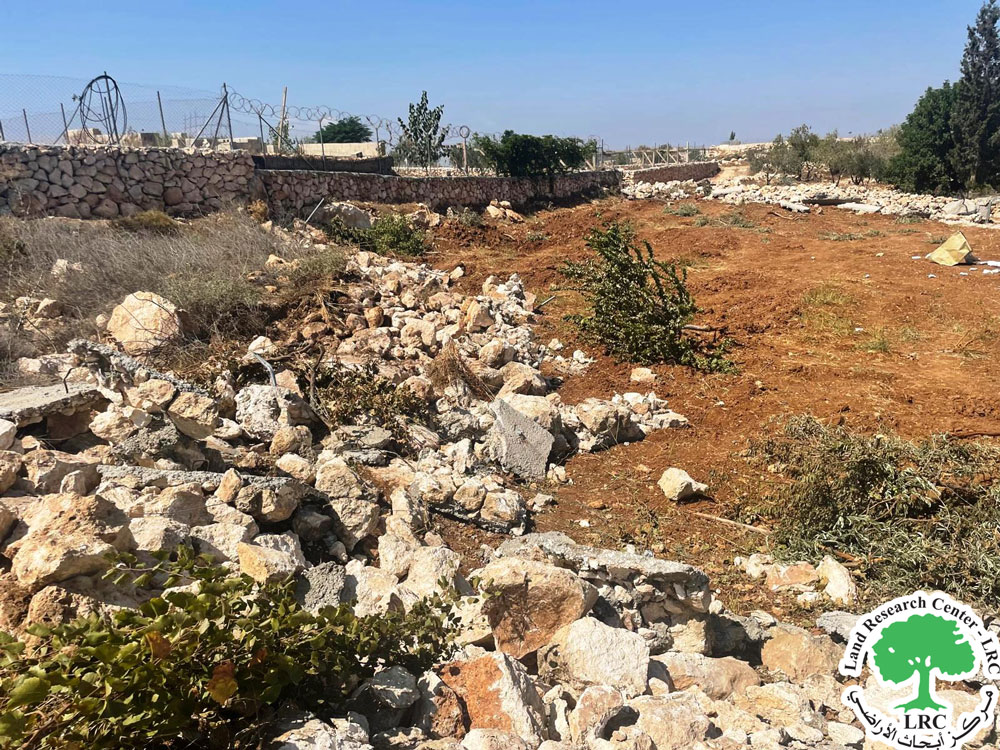
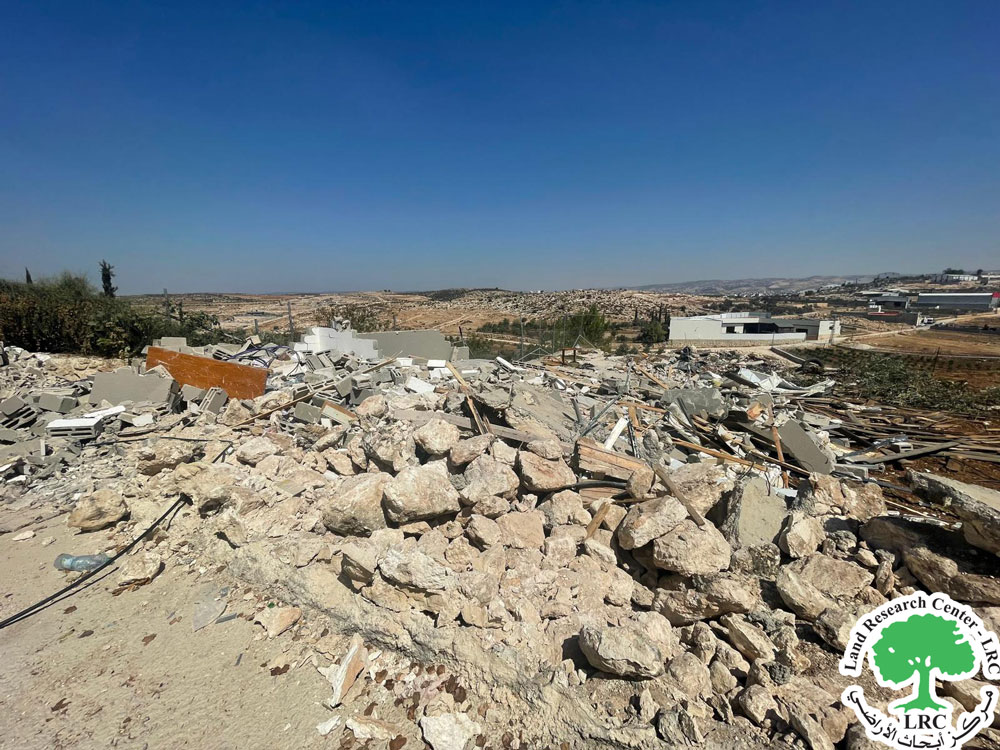
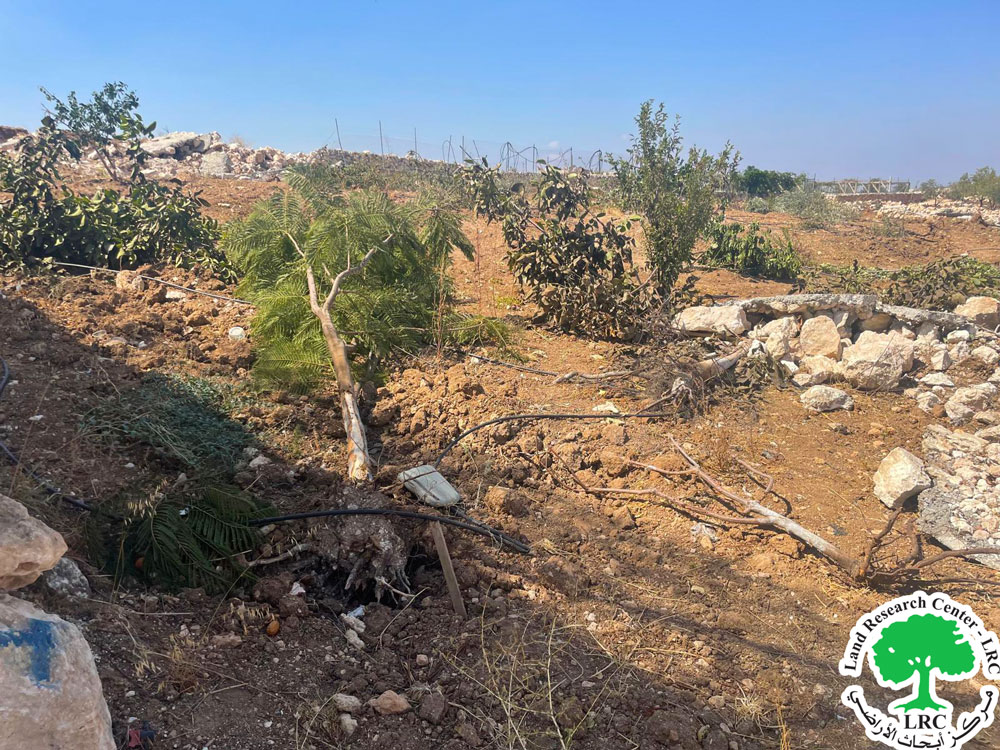
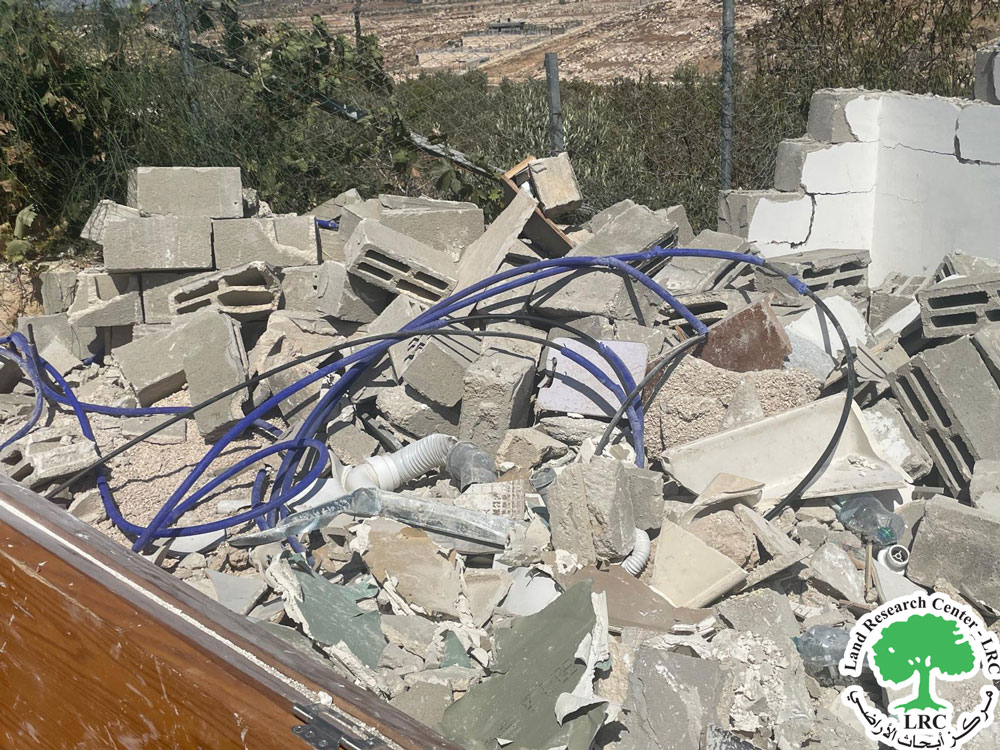
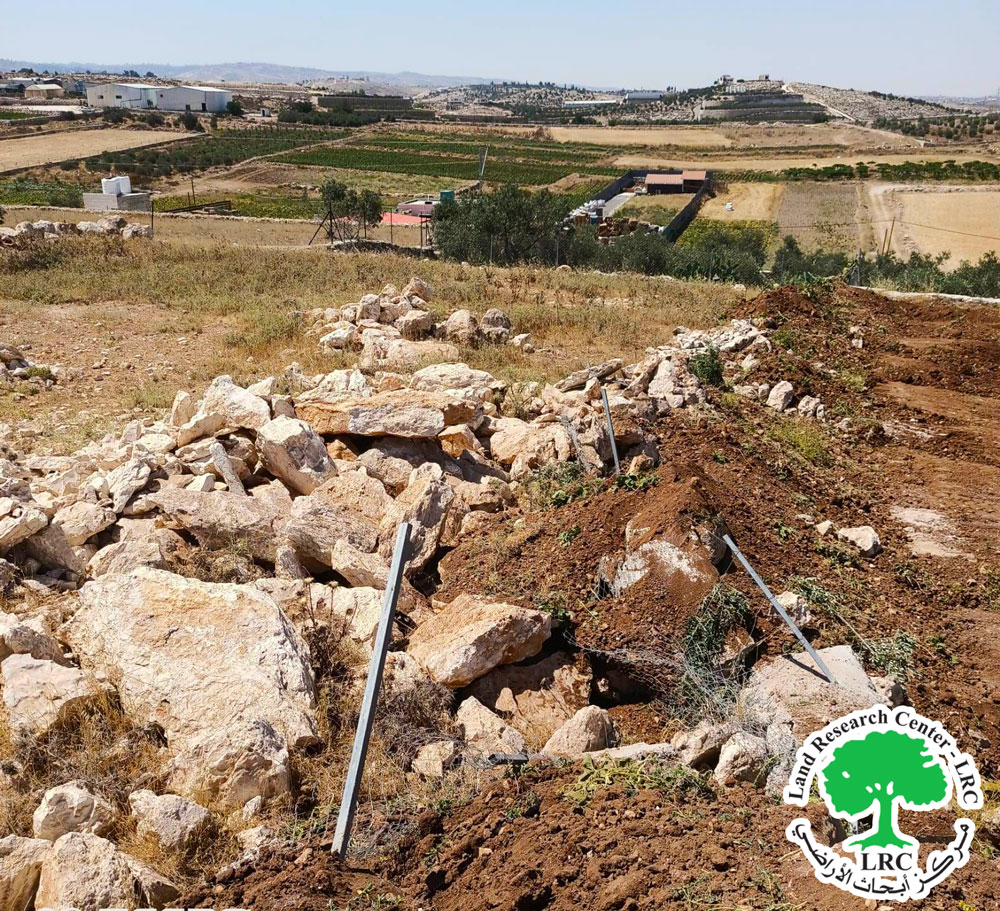
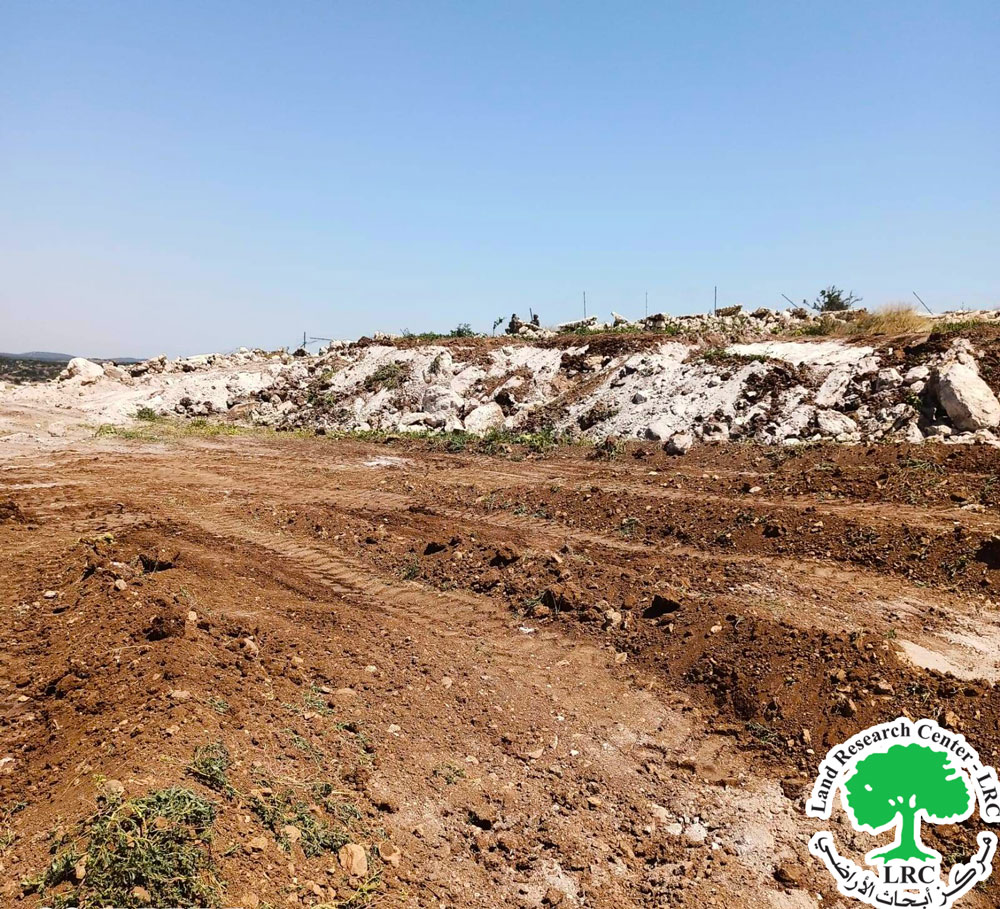
The Israeli occupation authorities ravaged agricultural land, uprooted trees and crops in Beit Ula, west of Hebron, On two separate occasions during 2024.
Each time, a force from the Israeli army, accompanied by demolition crews from so- called Civil Administration affiliated with so- called custodian of government and abandoned property – raided the town. They brought bulldozers and excavators with them, and proceeded to destroy and bulldoze citizens’ lands in western part of the town.
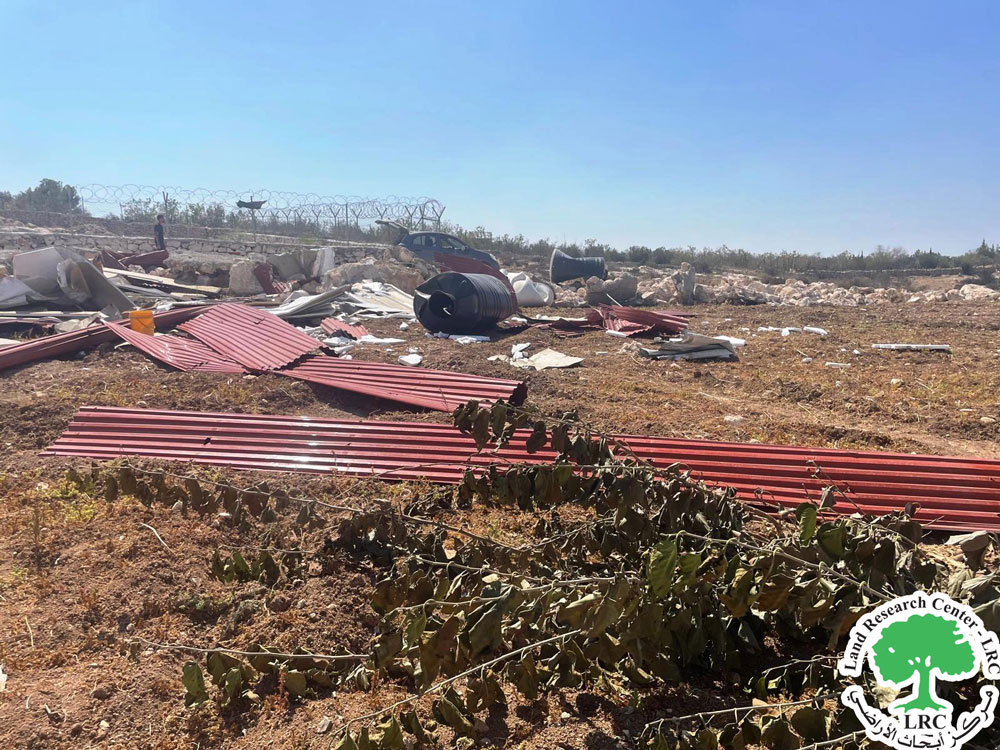
The machinery proceeds to demolish stone terraces, walls, barbed wire fences, and metal gates. Afterward, they enter the land plots to uproot trees, demolish any agricultural structures or water wells built on the property, and destroyed plastic water tanks used for irrigation. Called as ‘’State land evacuation operation’’, a process in which farmers and their crops are forcibly removed from the land and the area is returned to its’’ previous state’’. On the pretext that these lands were allegedly confiscated (according to the military orders and the occupation) and transferred to the control of the occupation authorities.
Since the beginning of 2024, the Israeli occupation authorities have carried out two bulldozing operations on lands belonging to Beit Ula town, according to Beit Ula Municipality.
First: bulldozing operation on June, 5th ,2024, targeted citizens’ lands in ( Wadi al Raqati, Dhur al Kharj and Al M’ikhdh ) areas, west of the town.
The following table details the names of affected citizens and the nature of the damage they suffered:
Number | Affected citizen | Damaged area | The Damage |
1 | Ezzat al Natsheh | 5 dunams | Agricultural room+ 2 water tanks +50 various trees + stone terraces+ 20 various trees. |
2 | Mohammad Hassan Tafesh | 900m2 | Various trees+ stone terraces. |
3 | Loay Abu Aysha | One dunam | Plastic water tank + stone terraces. |
4 | Mohammad Isa’ed | 2 dunams | 50 various trees |
5 | Aqeel Abu Aysha | 3 dunams | stone terraces+ 40 trees |
6 | Leena Abu Aysha | 1.5 dunam | 20 trees |
7 | Muhanad Abu Gharbiah | 1 dunam | stone terraces+ 20 trees. |
8 | Sami Abu Munshar | 1 dunam | stone terraces+ 20 trees. |
9 | Jamil Met’ab | 1 dunam | stone terraces+ 20 trees. |
10 | Tha’er Met’ab | 1 dunam | stone terraces+ 20 trees. |
11 | Ammar Abu Gazzaleh | 1 dunam | stone terraces+ 20 trees. |
12 | Aqeel Abu Aysha | 1 dunam | stone terraces+ 20 trees. |
13 | Tayseer Abu Aysha | 1 dunam | stone terraces+ 20 trees. |
14 | Nabeel Ahmad Alamleh | 4 dunams | Stone terraces+ irrigation network+ metal fence. |
Second: bulldozing operation on September, 25, 2024 , targeted citizens’ lands in (Al Zardom , Al M’ikhdh) areas. According Beit Ula municipality:
Number | Affected citizen | Damaged area | The damage |
1 | Amjad Al Karaki | 800m2 | Stone terraces +water tanks + 20 various trees. |
2 | Mohammad Sider | 1.5 | Stone terraces+40 olive trees. |
3 | Loay Dofash | 1 dunam | Agricultural room from wooden+ metal gate. |
4 | Ihsaan Dofash | 1 dunam | Agricultural room+ Stone terraces+3 tanks +50 trees. |
5 | Bahaa Abdeen | 2 dunam | Stone terraces+ agricultural room+ 20 various trees. |
6 | Mahran Alhemoni | 0.5 | Agricultural room+ gate+ stone terraces+ 10 trees. |
7 | Nader Hassona | 1200m2 | Plastic tank+ Stone terraces+ 20 trees. |
8 | Abd al Fattah Alamleh | 1200m2 | Water tanks + agricultural room+ 20 trees. |
9 | Ammar Shoukri Morad | 1 dunam | Agricultural room+ 20 trees + Water tank. |
10 | Moath Al Qawasmeh | 1 dunam | 20 trees + stone fences. |
11 | Samah Abdeen | 1 dunam | Agricultural room+20 various trees. |
12 | Wael Ahmad Abu Habteen | 2 dunam | Stone terraces+ gate+ various trees about 100 of olive and grapes.
|
 |  |
 |  |
 |  |
The affected citizen, Wael Ahmad Abd Raboo Abu Habbten, a member of Beit Ula Municipality, said:
‘’ I own a plot with total area 2 dunams in Al M’ikhdh area to the west of the town, which is approximately 1 kilometer away from annexation and expansion wall. 7 years ago, I rehabilitated it and preparing for cultivation, planting various trees, including 50 olive saplings, 50 grapevines, and 10 almond trees. I also surrounded the plot with stone walls, trying it into an orchard and source of fruit for my family of 8 members, including 6 children, with 3 females. after the trees reached the age of 6 years, the occupation authorities demolished what had been built and uprooted the trees.”
The occupation authorities had targeted these lands with written notices titled “evacuation orders”, issued by so called “responsible for government and abandoned property,” on June, 26th ,2023, demanded from the citizens demolished what had been built and classified as a’’ state lands’’, within jurisdiction of ‘’Telem’’ settlement located to the east of the site.
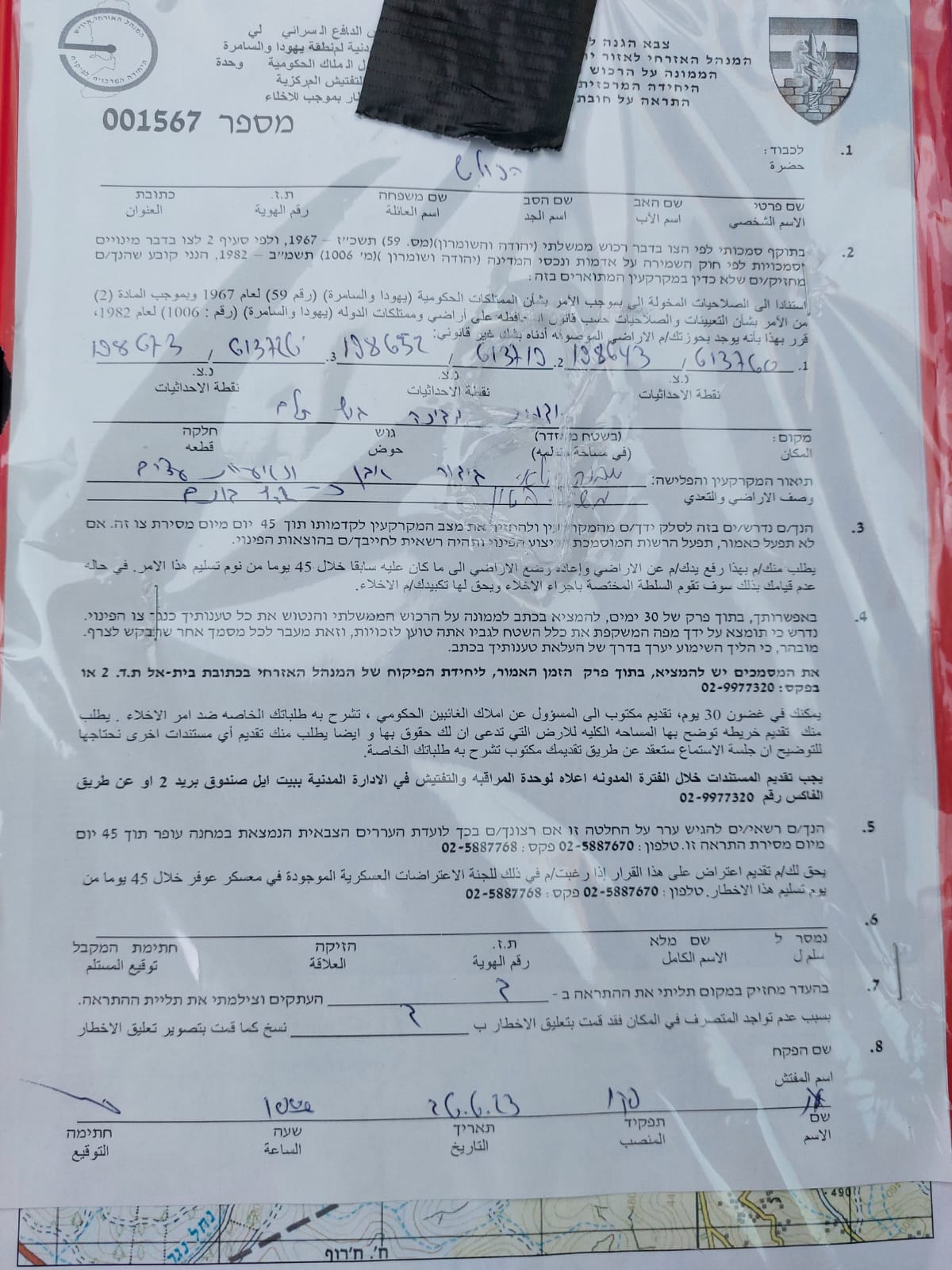 | 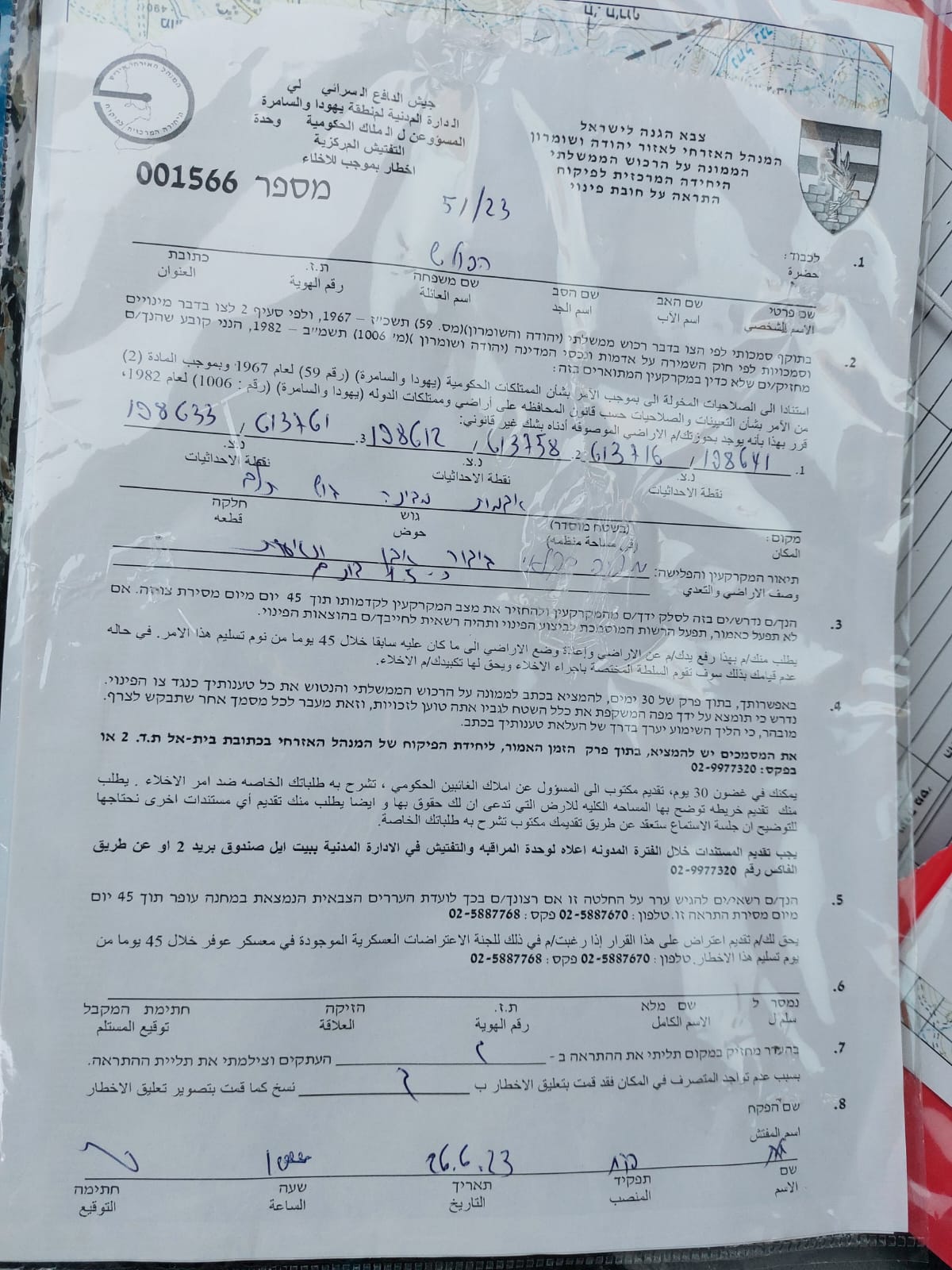 | 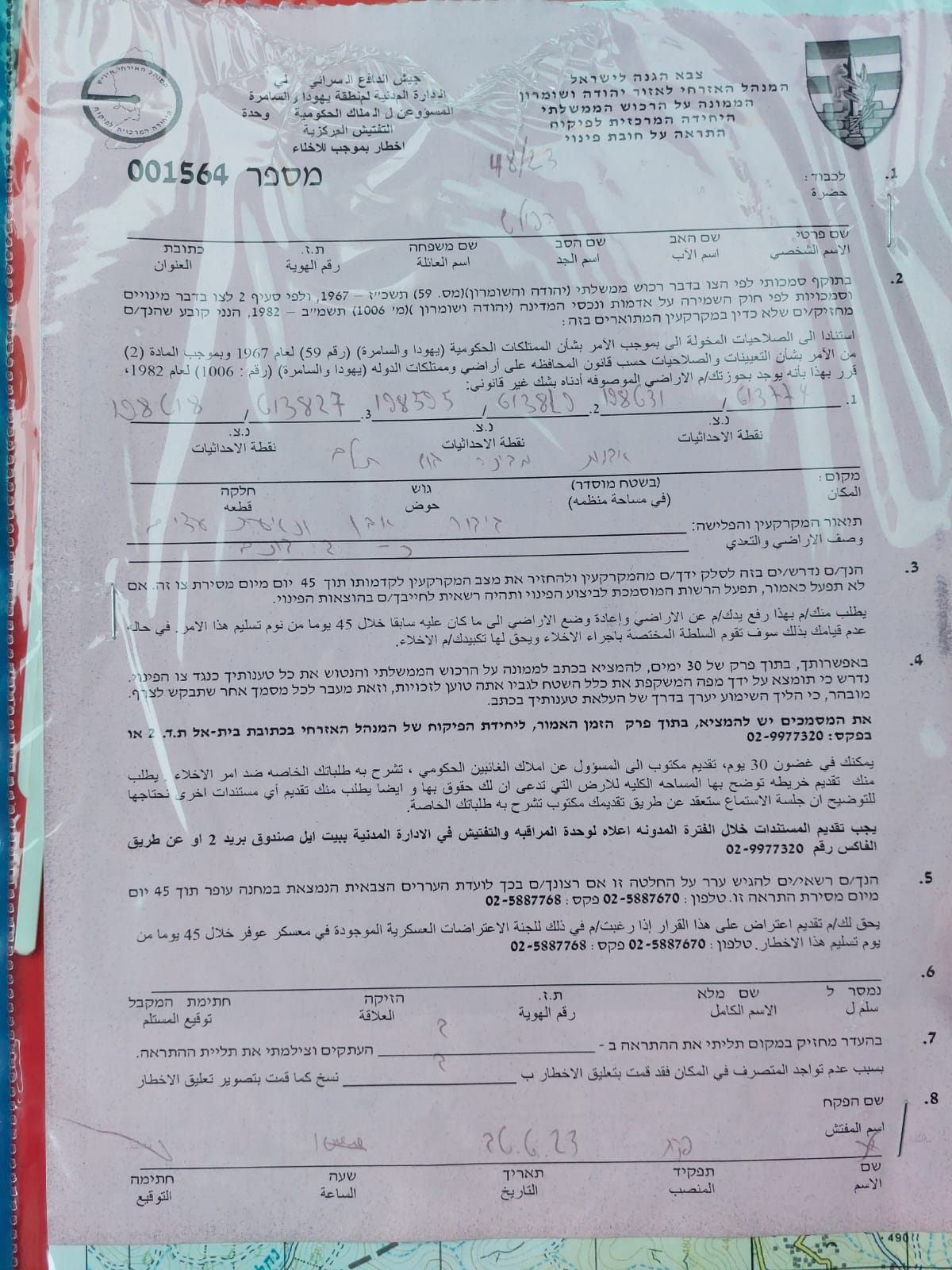 |
The Occupation Authorities Issued Eviction Notices in Beit Ula lands (26-6-2023)
An overview of Beit Ula Town:
Beit Ula is located 14 km to the northwest of Hebron city; it has a total area of 24,000 dunums, most of which are classified as area “B” according to Oslo Accords. The town houses a total population of 13,000 Palestinians and is run by a municipal council that was elected in 2012.
The town is famous for olive and vegetable plantation in addition to metal manufacturing and stones factories.
Around 2000 dunums from the lands of Beit Ula were confiscated for the favor of the apartheid wall establishment in 2004. Over the past couple of years, the Israeli occupation authorities ravaged tens of agricultural dunums, uprooted thousands of trees, demolished five water cisterns and confiscated many agricultural equipment and tractors in the town. The Israeli government took the aforementioned measures to push Palestinian farmers to abandon their lands (classified as area C). But farmers never let down their lands and always tried to object confiscation and demolition orders in Israeli court.
This land destruction process indicates that the Israeli occupation state turns its back on all international human rights laws and conventions. It practices discriminatory measures against the Palestinians, stripping them of their property, whether it be buildings or land. This occupation policy is a grave sin committed by the occupation and a violation of all international norms and laws, which stipulate the following:
- The Fourth Geneva Convention of 1949, Article 174: "The destruction and appropriation of property on a large scale is prohibited, unless required by an urgent military necessity, and is carried out in an illegal, unlawful, and arbitrary manner."
- The Roadmap Agreement signed between the Israelis and Palestinians (under the sponsorship of the United States, the European Union, Russia, and the United Nations) on April 30, 2003, which called on the Israeli government to freeze all settlement construction activities: "The Israeli government must immediately work to dismantle all settlement outposts established since March 2001, in accordance with the Mitchell Report, and the Israeli government must freeze all settlement construction activities, including natural growth, as per the plan adopted and issued by USCR 1515-2003."
- Security Council Resolution 446 of 1979: "Called on Israel to cancel its previous measures and refrain from taking any action that would alter the legal status, geographic nature, or materially affect the demographic composition of the Arab territories occupied since 1967, especially Jerusalem, and not to transfer its civilian population."
- The Universal Declaration of Human Rights, adopted and proclaimed by the United Nations General Assembly under Resolution 217 A (III) on December 10, 1948, states: "No one shall be arbitrarily deprived of his property," which means that Israel is not allowed to destroy or confiscate Palestinian property under any pretext.
مشروع: حماية الحقوق البيئية الفلسطينية في مناطق "ج" SPERAC IV - GFFO
Disclaimer: The views and opinions expressed in this report are those of Land Research Center and do not necessarily reflect the views or positions of the project donor; the Norwegian Refugee Council.
إخلاء المسؤولية: الآراء ووجهات النظر الواردة في هذا التقرير هي آراء ووجهات نظر مركز أبحاث الأراضي ولا تعكس بالضرورة وجهات نظر أو مواقف الجهة المانحة للمشروع؛ المجلس النرويجي. للاجئين
