2025-04-23
Settlers Set Fire to an Agricultural Structure and Tents in Bardala village / Tubas Governorate
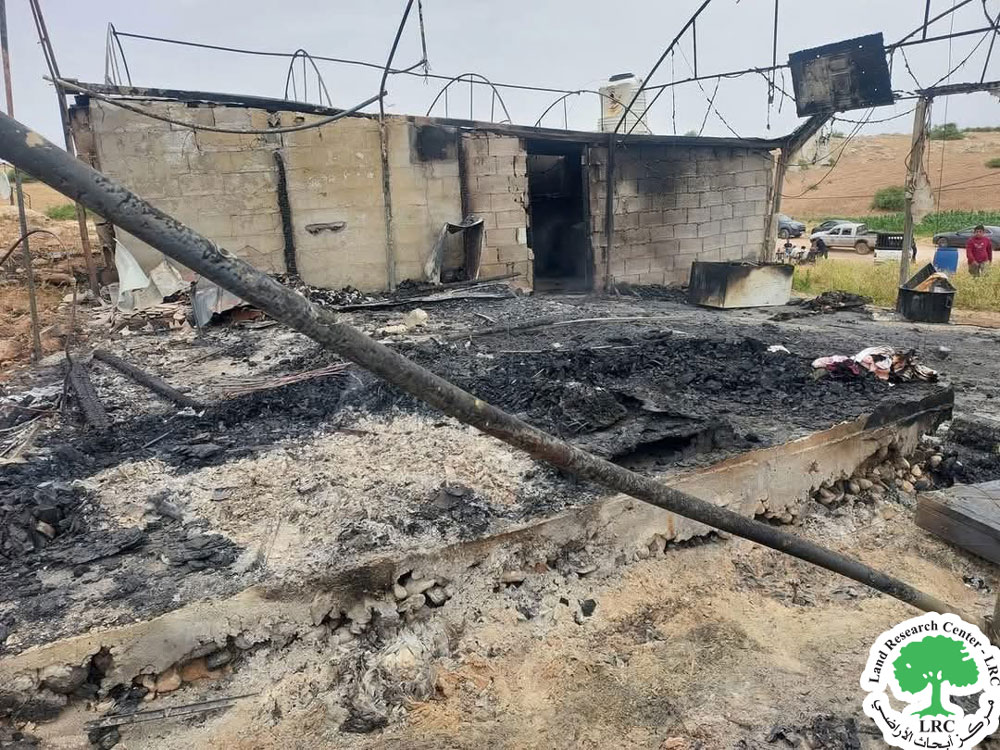
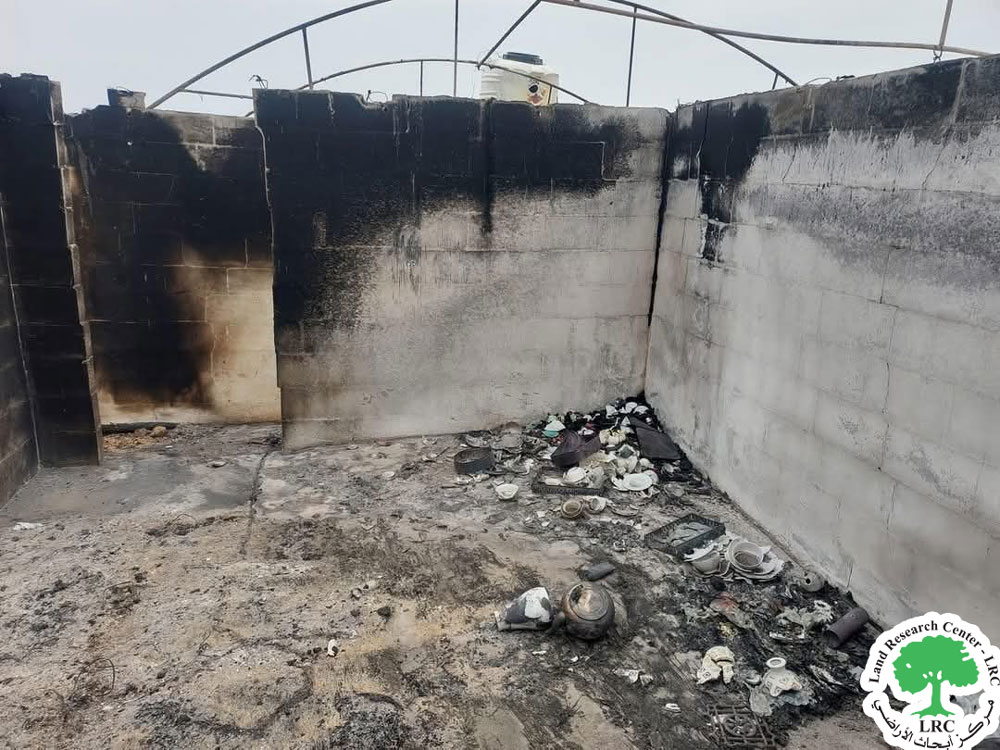
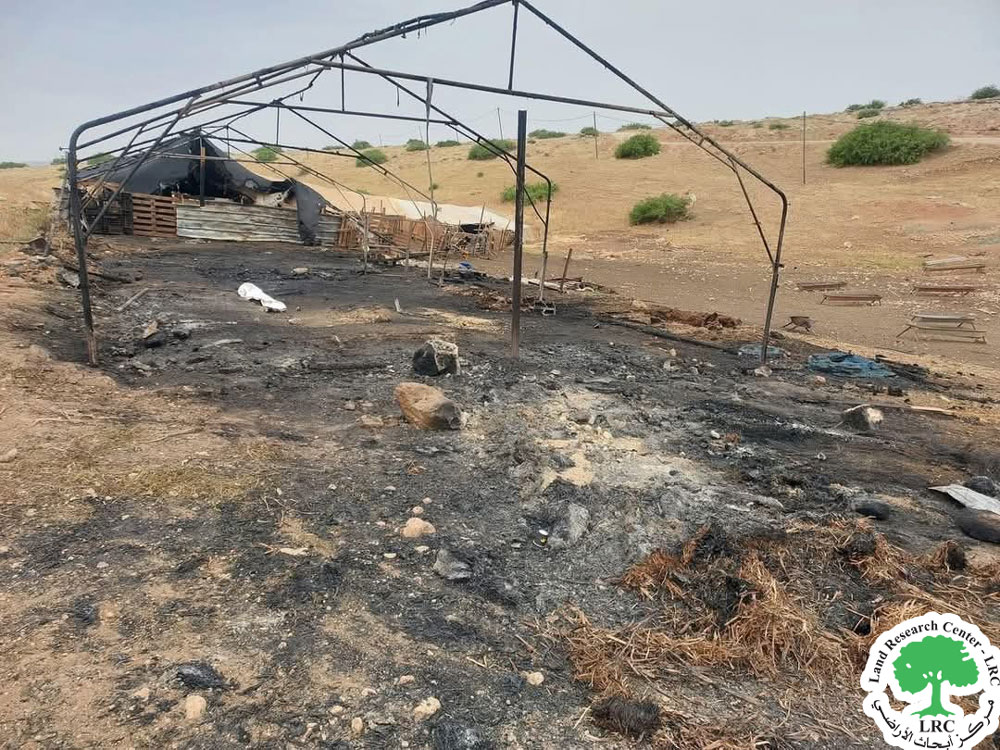
Violation: Burning sheep and an agricultural structure, and tents.
Location: Bardala village / Tubas governorate.
Date: April,23th,2025.
Perpetrator: Colonial outpost in Qa’oon area.
Affected party: Farmer Mohammad Ibrahim Ahmad Jahaleen.
Details:
Settlers who live in colonial outpost in Sahl Qa’oon area carried out destruction and damaging agricultural properties in Bardala village northeast of Tubas governorate.
It is worth noting that a group of settlers faced a group of farmers at night in Bardala village, as the residents of the village attempted to fend them off, prompting the settlers to headed towards Bedouins communities located near a new colonial outpost.
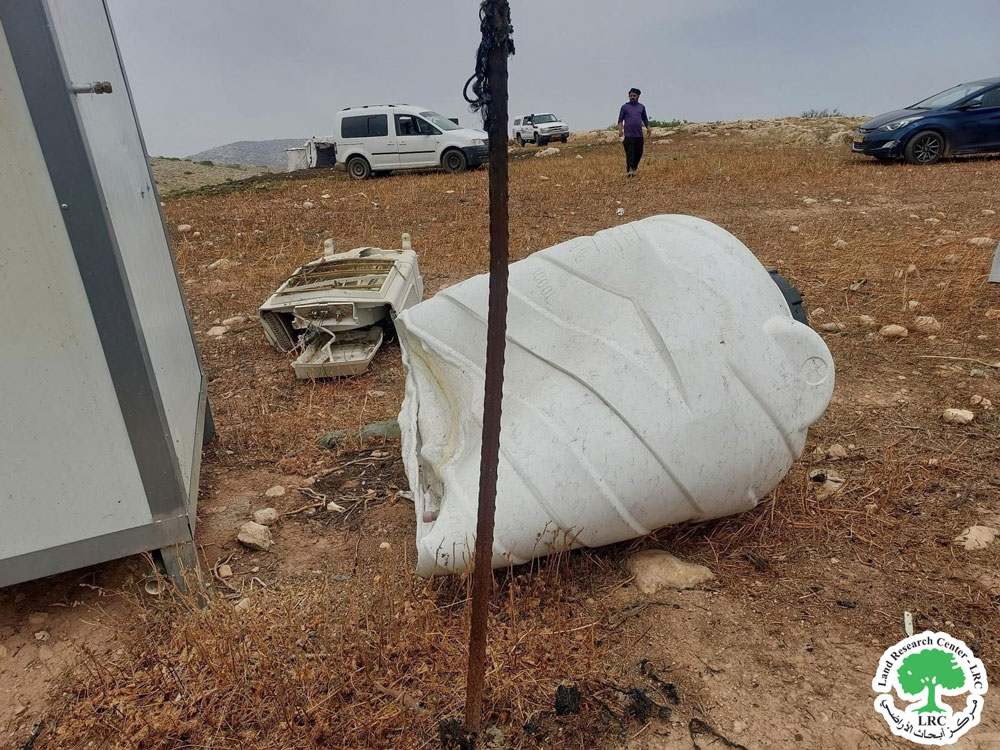
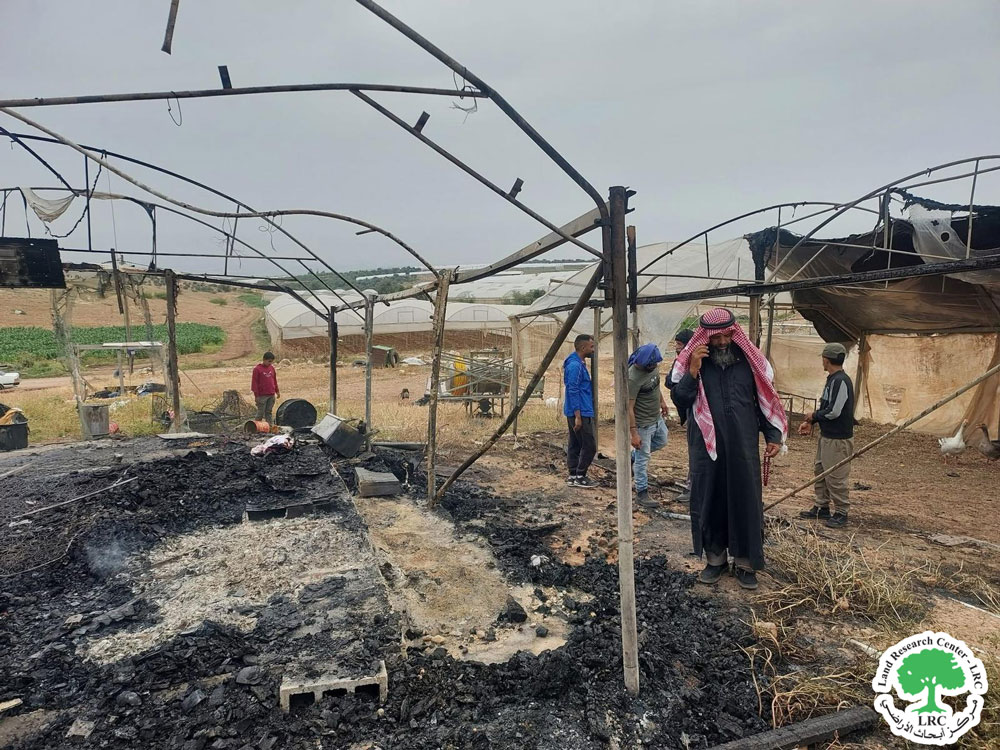
A group of settlers set fire in a structure made of bricks and zinc, resulting to death of 14 sheep that were inside the agricultural tent.
The structures belong to citizen Mohammad Ibrahim Ahmad Jahaleen, who supports a family consisting of 8 members, 3 of them are female, and 2 children.
In details, the affected citizen told LRC researcher as follows:
‘’I have been living in Bardala village over past nine years, rely on livestock and I live in a house made of bricks and tin roof, a few months ago, settlers established a new colonial outpost just 400 meters away from the community that I lived in, until now we suffer daily from settlers’ practices from this outpost, by attacking tents, destruction irrigation networks, crops, and agricultural roads.at the night of Wednesday around 2 am, settlers attacked on agricultural fields. There was a confrontation between them and the farmers of the village, I was awake and I noted that a group of settlers beginning to headed to my house, I demanded from the family member to exist and escape. Settlers also set fire in a house then in sheep tent that was shelter to 14 sheep and burned, I can’t near even the settlers exist, after the fire of what I owned.
It is worth noting that the Israeli occupation established in October 2024 a new pastoral outpost consisting of 2 tents made of sheets and shed on 2 dunams in Sahl Qa’oon area, within natural block no. 113 and plot no.7 from Bardala lands, as these lands classified as private lands (taboo lands with completed levelling process in Jordan.
About Bardala:
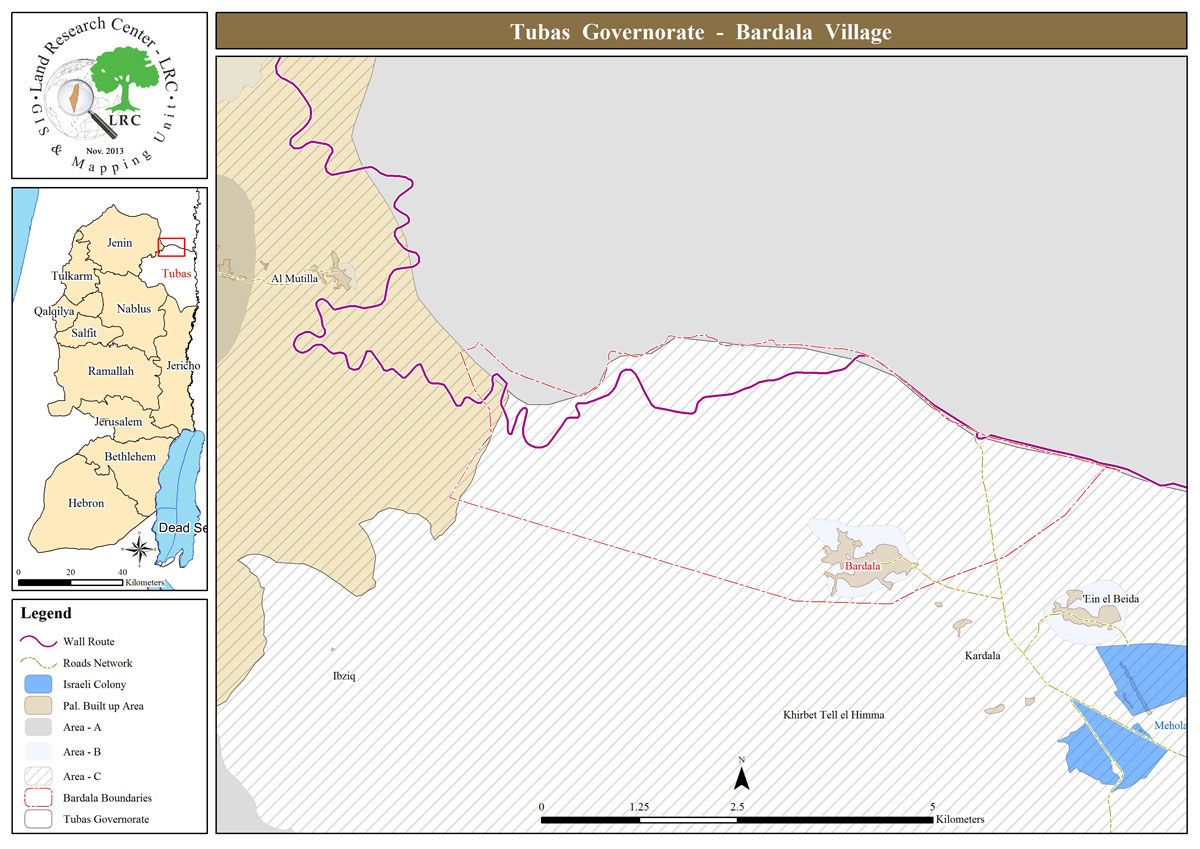
25 km to the north of Tubas, Bardala village is surrounded by the Green Line (north), Raba (west), Ain al Baeda (east) and Tubas (south).
It has a population of 1607 people (2017 census). Its total area is 18329 dunums, of which 404 dunums are considered built-up area.
The Israeli occupation devoured 252 dunums of its land to build bypasses road, especially road no.90. It also confiscated 819 dunums to build the Separation Wall and isolated 2100 dunums of Bardala land as a result.
According to Oslo Accords, 90% of the village is classified as area “C”, which is under Israeli authority while only 5% is area “B” that is under the control of PA.
- Area B (910 dunums).
- Area C (16845 dunums).
- Burning Agricultural Structures and Its Environmental Impact:
The Israeli occupation and his settlers are continuing in their previous method for targeting the livestock, the occupation used several methods to destroying the Palestinian agricultural sector including: stealing sheep, sprayed the poisons and chemical material, shouted fire. Killing livestock and their grazers, in addition to demolition and destruction of bricks, destroying the irrigation networks from the communities, as thirsty to livestock to livestock to preventing them to springs water, with burning of sheep while they are alive, all these actions are with aim of destroying the agricultural and environmental sector because the Israeli actions.
The inhabitants of the Bedouin or residential communities depend on raising livestock as a primary source of income in addition to self-sufficiency for Palestinian families. However, these and all agricultural facilities have recently become a target for the Israeli occupation and its settlers. In addition to the demolition operations and threats by the Israeli occupation, they have also become an official target for the settlers, The settlers have begun to burn them, as in the case of the Jahalin family, whose pen was burned by the settlers, which led to the death of all the sheep. Therefore, the settlers committed a grave crime against the animals first and foremost, and caused great harm to the Palestinian environment surrounding these agricultural facilities, especially since the pen was partly constructed from plastic materials, in addition to the presence of food for the livestock, And other contents all lead to the emission of various pollutants into the air, which causes discomfort and harm to humans, animals and agricultural crops as well, especially since plastic materials are rich in carbon - which is considered a greenhouse gas - and also during the ignition of fires, particles of ash fly and pollute the air and those materials evaporate and pollute the air and may endanger people's lives by inhaling vapors of plastic materials and other materials.
Despite the fact that the Israeli Ministry of Environmental Protection is the responsible authority for environmental protection and pollution control, as stated on its official website—where it mentions that "air pollution does not stay in one place, nor does it know borders; it spreads according to climate conditions, winds, temperature, and humidity"—the primary contributors to air pollution are the settlers in the settlements and outposts across the West Bank. The burning of agricultural structures, trees, crops, other buildings, and even Palestinian homes and vehicles is a widespread practice among settlers. According to the Israeli Criminal Procedures Order of 2022, "burning waste in an illegal location is subject to a fine of 2,000 shekels for an individual and 12,000 shekels for a company." The order further acknowledges that such practices can lead to chronic illnesses and an increased risk of cancer due to the inhalation of toxic substances.
The burning of such agricultural greenhouses is no less harmful than burning waste; in fact, it is even more detrimental because it occurs on agricultural land that is privately owned by Palestinians. Therefore, the violation should be considered more severe due to the illegal entry onto someone else's property and the environmental harm caused.
Undoubtedly, the actions of the Israeli side violate not only international laws but also Israeli laws themselves. Referring to the details of this case, the Israeli Penal Code of 1977 and its amendments stipulate that trespassing on someone else's property with the intent to commit a crime is punishable by law. Article 447 of the Penal Code states:
"Anyone who does any of the following with the intent to intimidate, insult, or harass the property owner, or to commit a crime, shall be punished with imprisonment for two years:
(1) enters or crosses the property;
(2) enters the property unlawfully."
(b) A crime is committed under this section if the offender carries a firearm or a sharp weapon, and the punishment is imprisonment for four years.
Reading the text of this article, it is clear that the Israeli Penal Code criminalizes the mere act of entering someone else's property without authorization, with the intent to insult, harass, or intimidate, and punishes it with a two-year prison sentence. The punishment is doubled if the offender enters the property and commits a crime, such as using a weapon or sharp tool, or even vandalizing agricultural land by cutting, burning, or destroying it. This is explicitly prohibited in the text of the aforementioned Penal Code.
Related links:
Vandalize agricultural areas due to that settlers cattle their caws in Bardala village, north Tubas
مشروع: حماية الحقوق البيئية الفلسطينية في مناطق "ج" SPERAC IV - GFFO
Disclaimer: The views and opinions expressed in this report are those of Land Research Center and do not necessarily reflect the views or positions of the project donor; the Norwegian Refugee Council.
إخلاء المسؤولية: الآراء ووجهات النظر الواردة في هذا التقرير هي آراء ووجهات نظر مركز أبحاث الأراضي ولا تعكس بالضرورة وجهات نظر أو مواقف الجهة المانحة للمشروع؛ المجلس النرويجي. للاجئين