2026-05-12
Israeli colonial settlers Attack on Olive Trees in Rajum A’li, East Yatta, South Hebron
Violation: Attack on olive trees.
Date: 12/05/2026.
Location: Rajum A’li – Yatta / Hebron Governorate.
Perpetrator: “Shimon” Israeli colonist Outpost.
Victim: Farmer Ismail Al-Adra.
Details:
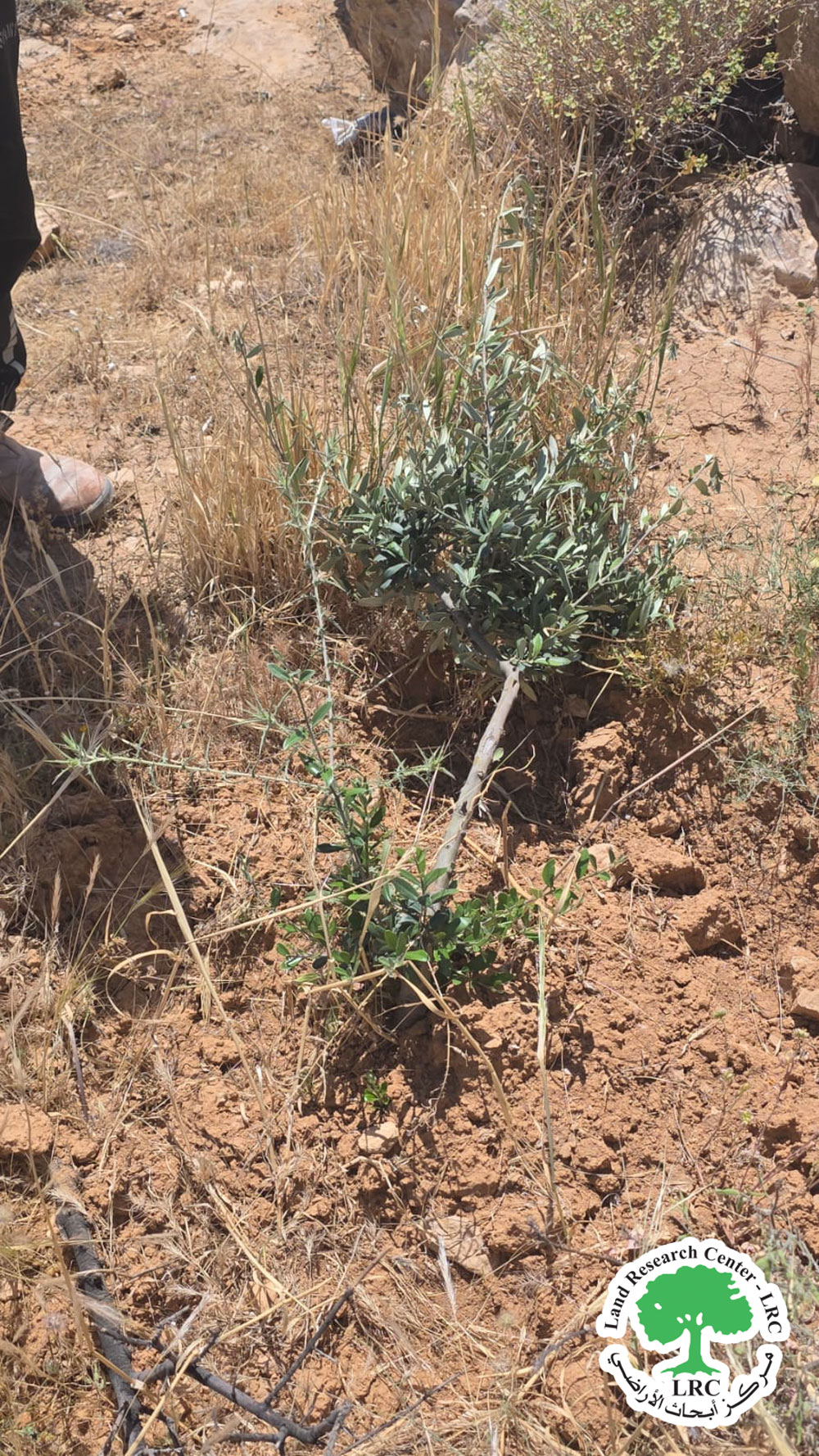
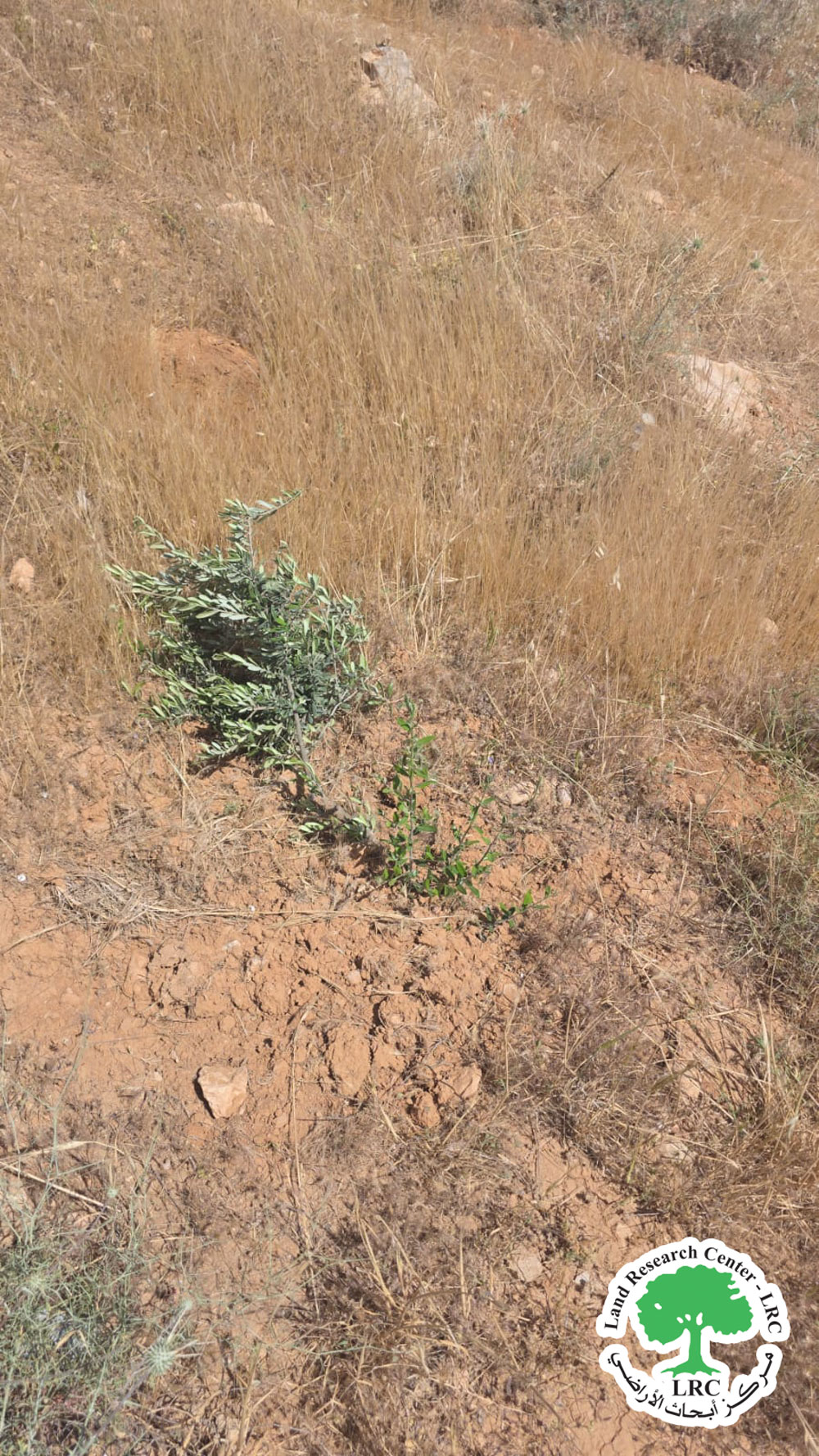
Settlers, who are shepherds, released their livestock into the lands of farmer Ismail Ibrahim Al-Adra in the “Rajum A’li” area, southeast of Yatta town, causing significant damage to the olive trees as a result of grazing. The settlers also cut and broke a number of trees.
In an interview with a researcher from the Land Research Center, the farmer’s son, Jibril Al-Adra (43 years old):
stated that this was not the first attack on his father’s lands due to colonistpastoral activities. Approximately two kilometers east of their lands lies the “Shimon” Israeli colonist outpost, established on lands in the Shomra area near Al-Zawidin village. The outpost engages in livestock breeding and grazing on Palestinian lands, repeatedly targeting the Al-Adra family lands in Rajum A’li by releasing sheep into olive groves and destroying surrounding fences.
Jibril Al-Adra explained that on Tuesday, May 12, 2026, the settlers released their sheep onto a five-dunum plot of olive trees, aged between five and six years. The flock grazed on about 20 olive trees, while the settlers intentionally broke branches and trampled around 10 additional trees with their feet.
He also pointed out that these attacks occurred in the presence of Israeli soldiers, who accompanied the colonist while he grazed his flock on the Palestinian lands. When one of his brothers attempted to remove the s colonist and his sheep after asking him to leave the trees alone, the soldiers arrested him and took him to a nearby military camp near Susya village, holding him from late morning until evening. He was instructed to inform his family not to obstruct the colonistif he returned to graze in the area.
Al-Adra noted that each time they experience such attacks, they contact the Israeli police and file complaints, requesting the authorities to inspect the damages on their agricultural lands. However, the police have consistently failed to act, and settlers have been allowed to return and graze in these lands without restriction.
Environmental Impact:
The overgrazing of Palestinian agricultural lands by colonist herds poses a serious environmental threat that exceeds direct economic damage. It leads to the degradation of vegetation cover, soil erosion, and loss of fertility due to the stripping of protective plants. Restoring such damaged lands requires years of effort and care. Overgrazing also contributes to the desertification of natural pastures and the decline of biodiversity, threatening the fragile ecological system in southern West Bank with cumulative and potentially long-term impacts.
The settlers’ release of cattle onto Palestinian agricultural lands, which results in the destruction of olive trees, constitutes a clear violation of international environmental laws and conventions that prohibit practices causing land and vegetation degradation. According to the UN Convention to Combat Desertification (UNCCD), overgrazing is a primary factor causing soil degradation and fertility loss and is prohibited in environmentally fragile areas. The Convention on Biological Diversity (CBD) also emphasizes the protection of agricultural ecosystems and the prevention of activities that destroy vegetation or harm biodiversity, which applies to the deliberate release of settlers’ sheep or cattle on Palestinian cultivated lands.
Legal Framework:
International humanitarian law prohibits attacks on civilian property and natural resources, classifying deliberate damage to agricultural lands as a violation that threatens the livelihoods of civilians. In the context of the Sustainable Development Goals, particularly Goal 15 (Life on Land), protecting land and preventing overgrazing are essential commitments to safeguard the environment and ensure the continuity of agricultural production.
Conclusion:
The attack does not constitute merely a violation of private property rights; it represents a compounded environmental and legal breach affecting the agricultural and ecological system, violating international obligations to protect land, prevent desertification, and stop environmental degradation.
مشروع: حماية الحقوق البيئية الفلسطينية في مناطق "ج" SPERAC IV - GFFO
Disclaimer: The views and opinions expressed in this report are those of Land Research Center and do not necessarily reflect the views or positions of the project donor; the Norwegian Refugee Council.
إخلاء المسؤولية: الآراء ووجهات النظر الواردة في هذا التقرير هي آراء ووجهات نظر مركز أبحاث الأراضي ولا تعكس بالضرورة وجهات نظر أو مواقف الجهة المانحة للمشروع؛ المجلس النرويجي. للاجئين